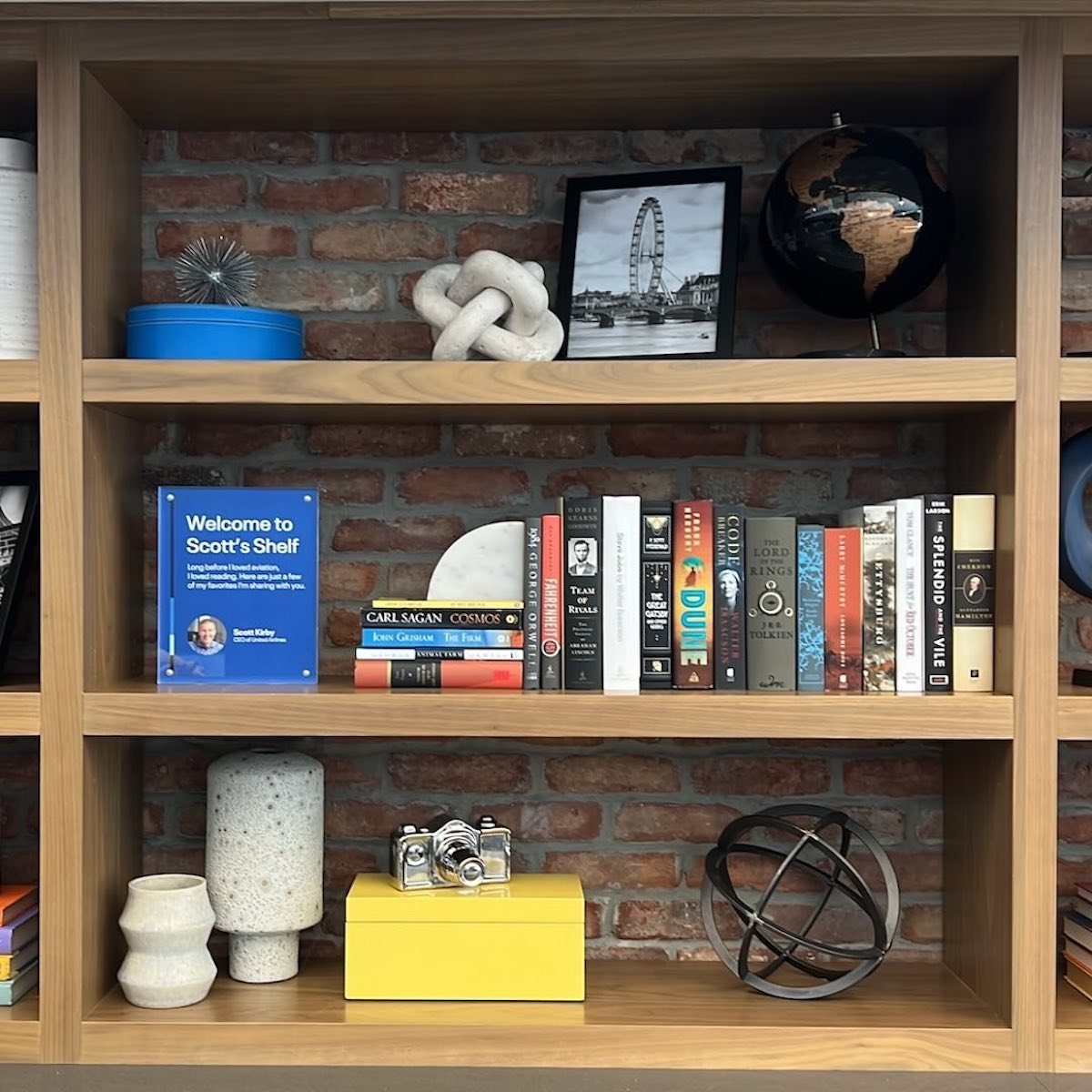
# United Airlines CEO Scott Kirby Highlights Summer Reading That Shapes Industry Thinking
Scott Kirby, the chief executive of United Airlines, dedicates three hours daily to reading, a discipline that separates boardroom executives from casual news consumers. His summer book list offers a window into the mindset of one of aviation's most influential leaders and hints at the priorities steering one of America's "Big Three" carriers.
Kirby's disclosed reading includes "Unreasonable Hospitality," a title centered on service excellence and guest experience. This selection speaks volumes about United's strategic direction under his tenure. The airline has faced persistent criticism over customer service incidents, from overbooking controversies to baggage handling complaints. By publicly embracing literature on hospitality, Kirby signals that operational culture and customer-facing standards remain top-of-mind priorities as United competes with American Airlines and Delta Air Lines for premium leisure and business travelers.
The CEO's reading habits reflect a broader trend among C-suite executives who view continuous learning as essential to navigating volatile industries. Airlines operate in a landscape shaped by fuel price volatility, labor negotiations, regulatory pressure, and post-pandemic demand fluctuations. United alone manages operations across 350 destinations on five continents, with a fleet exceeding 800 aircraft. That complexity demands intellectual rigor beyond quarterly earnings calls.
Kirby has led United since 2015 and has championed modernization initiatives including cabin product redesigns, route expansion, and technology investments. His public reading list becomes a proxy for corporate values. When a CEO publicly recommends books on hospitality and service, investors and employees receive a message about what the organization prizes. It influences hiring practices, training budgets, and customer interaction protocols across thousands of United employees at hubs like Chicago's O'Hare, Houston's George Bush Intercontinental, and Newark Liberty International.
The airline industry watches CEO messaging closely. Southwest Airlines, once defined by Herb Kelleher's maverick leadership style, built culture around books and values. Delta's Ed Bastian has emphasized operational reliability. American Airlines leadership has cycled through several CEOs over recent years. United under Kirby occupies a middle ground, balancing network carrier scale with an aspirational service standard that historically belonged to legacy carriers like United's predecessor Continental Airlines.
For travelers, a CEO invested in hospitality literature translates to tangible service improvements or at least documented commitment to them. Whether that means fewer gate changes, faster baggage claim, or smoother customer service interactions depends on execution. The gap between executive philosophy and frontline reality often determines customer satisfaction scores that appear in loyalty program retention data and Net Promoter Score metrics.
Kirby's three-hour daily reading discipline also sends a message about leadership at United. In an era of constant connectivity and social media noise, making space for deep reading represents a countercultural choice. It suggests patience with complex ideas, openness to outside perspectives, and belief that wisdom exists beyond algorithm-driven feeds.
The specific titles Kirby selects matter less than the fact he reads and shares his list publicly. It normalizes intellectual curiosity within a major corporation and potentially influences how thousands of United employees think about their roles. A gate agent or flight attendant learning their CEO reads about hospitality may recalibrate their own approach to difficult passengers or operational delays.