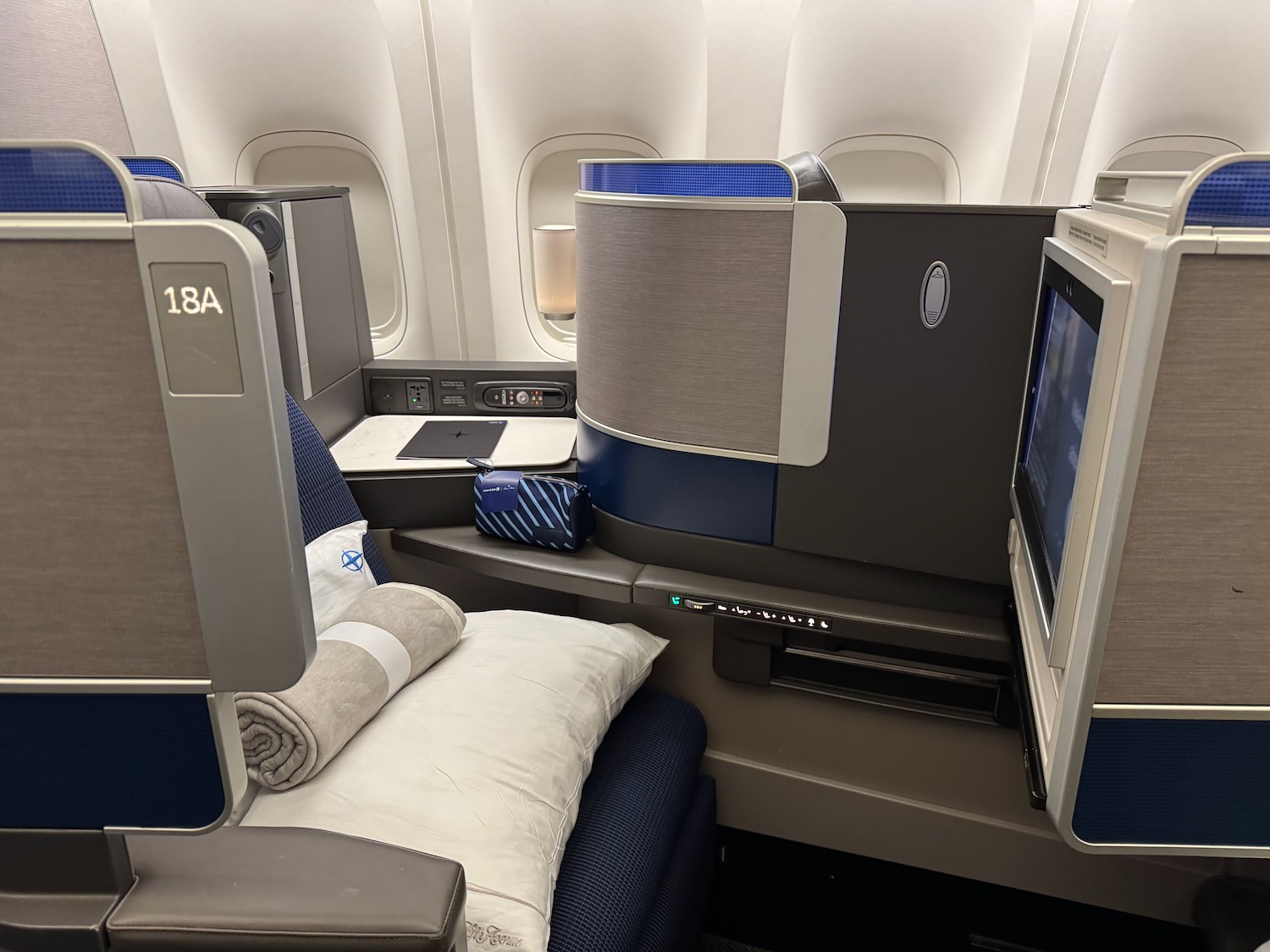
United Airlines has evolved its premium cabin experience significantly over eight years on its flagship transpacific route. A travel journalist's comparison of United's Polaris Business Class aboard the Boeing 777-300ER flying San Francisco (SFO) to Hong Kong (HKG) reveals how the carrier refreshed its long-haul product between 2018 and 2026.
The same aircraft, flight number UA869, and route provide a rare opportunity to measure incremental improvements in seat comfort, in-flight dining, amenity kits, and service standards. United's Polaris cabin represents the airline's premium positioning against competitors like American Airlines Flagship Business and Delta One on transpacific routes. These cabins command premium pricing, typically ranging from $6,000 to $12,000 for business class fares on SFO-HKG, though prices fluctuate seasonally and with demand.
The 777-300ER remains a workhorse on United's long-haul network, particularly for routes to Asia. This aircraft's 14-hour flight time between San Francisco and Hong Kong represents one of North America's longest commercial routes. Travelers investing in business class expect direct-aisle access, flat-bed seats, premium cuisine, superior amenities, and attentive service that justify the premium spend over premium economy.
Between 2018 and 2026, United upgraded various elements of the Polaris experience. The review compares cabin aesthetics, seat configuration updates, meal service quality, bedding improvements, and ancillary offerings. These refreshes reflect industry-wide trends where carriers constantly iterate premium cabins to retain high-yielding customers and justify premium pricing against competitors.
For business travelers and premium leisure passengers, understanding how United's product evolved matters. The carrier competes for lucrative transpacific demand against American, Delta, and increasingly, Asian