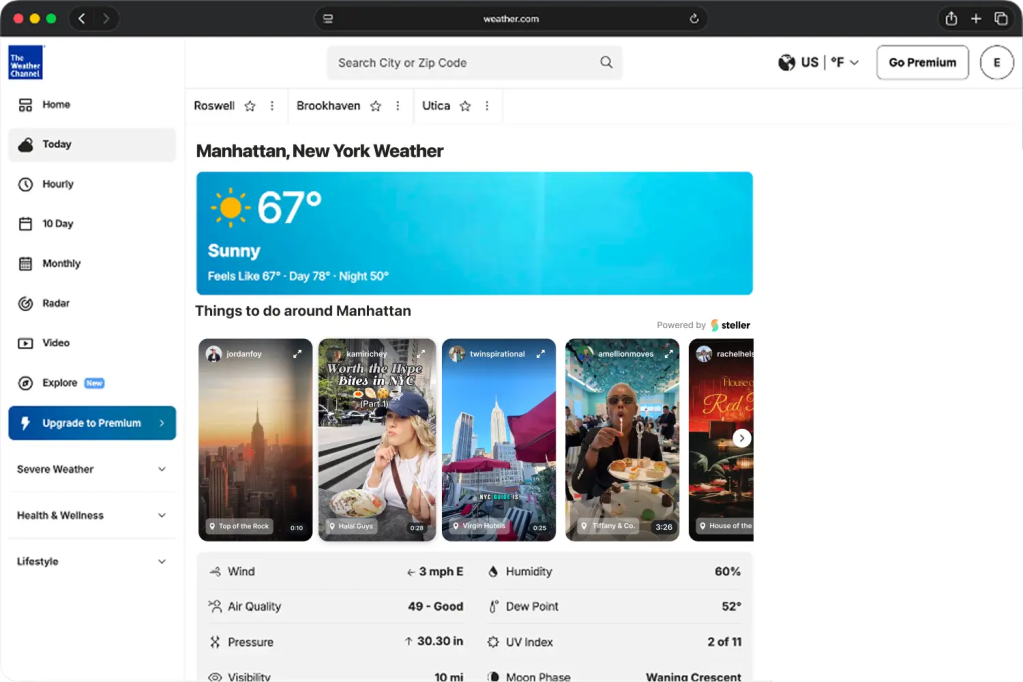
The Weather Company is pivoting beyond forecasts to become a travel booking platform, partnering with content platform Steller to convert weather-browsing visitors into trip planners and hotel boosters.
This partnership transforms Weather.com from a last-minute check before packing into a discovery engine for destinations. Users researching weather patterns for specific locations now encounter curated travel experiences, hotel recommendations, and itinerary suggestions alongside their forecast data.
The strategy targets a genuine pain point in travel planning. Millions visit weather websites daily, yet most leave without booking anything. The Weather Company captures this captive audience at a critical decision moment, when travelers already contemplate visiting a destination. Steller's social video format showcases experiences in context, from beachfront dinners to mountain hikes, making abstract destinations tangible.
This positions Weather.com as a competitor to traditional travel platforms like TripAdvisor and Booking.com, but with a built-in advantage. Weather drives real travel decisions. Someone checking conditions for Cancun next week is closer to purchasing than someone scrolling through generic travel content.
The model addresses shifting booking behaviors. Younger travelers increasingly discover trips through social platforms and visual content rather than search engines. By embedding booking capabilities within weather content, The Weather Company captures intent at the exact moment it forms.
Hotel brands and tour operators pay for placement within these experience feeds, creating a new revenue stream beyond ads. Weather.com's parent company stakes its future on this shift from information delivery to commerce facilitation.
For travelers, this integration simplifies comparison shopping. Viewing a destination's week-long forecast while simultaneously seeing available experiences and hotels reduces planning friction. However, it also blends editorial and commercial content more directly, raising questions about recommendation neutrality.
The move reflects broader travel industry consolidation. As booking power concentrates among fewer platforms, niche partnerships become essential for independent operators seeking visibility.