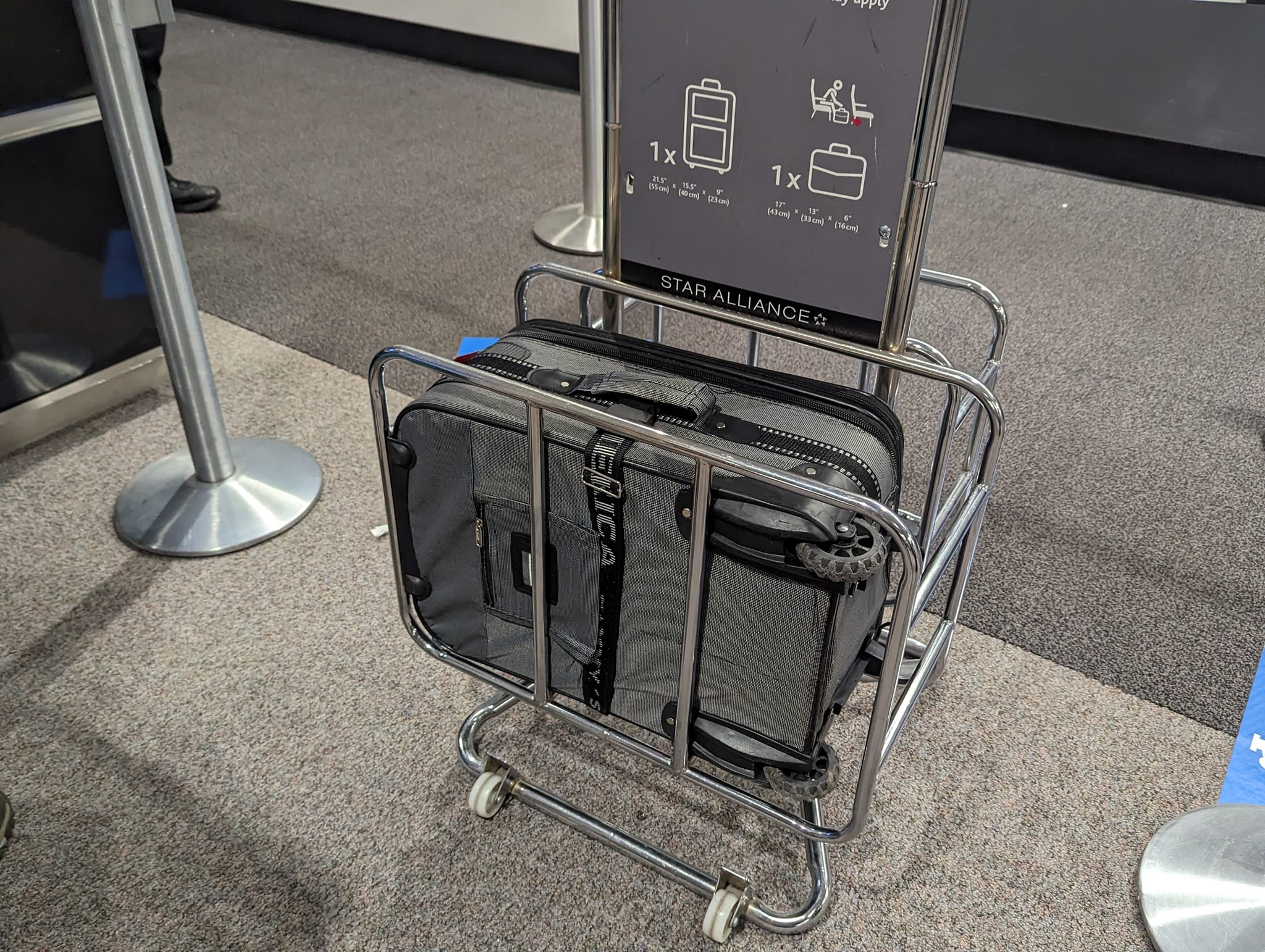
# Foreign Airlines' Carry-On Weight Checks: A Regulatory Game, Not a Safety Issue
International carriers increasingly weigh carry-on luggage at airport gates, often capping allowances at 15.4 pounds total weight. Airlines justify these restrictions through safety concerns, bin space management, and boarding speed. The reality tells a different story.
U.S. carriers operate without mandatory carry-on weighing, and their safety records remain exemplary. American Airlines, Southwest, and United manage boarding on aircraft identical to those used by European and Asian carriers without the gate-side scale theater. This disparity exposes the true driver: regulation, not engineering necessity.
The European Union and other regions impose stricter carry-on rules than the FAA, creating competitive disadvantages for foreign carriers. Budget airlines like Ryanair and EasyJet weaponize these restrictions aggressively. Ryanair's infamous 15.4-pound limit (including the bag) generates substantial ancillary revenue when passengers pay to gate-check oversized carryons or upgrade to larger allowances.
Weight restrictions ostensibly address overhead bin capacity and aircraft balance. Yet American planes function with generous carry-on policies and lighter weight restrictions. Southwest allows two free carry-ons regardless of dimension; United permits a personal item plus a rolling bag. Both airlines board efficiently without weighing a single bag.
The regulatory gap creates friction for transatlantic and transpacific travelers. Flying from New York to London on British Airways or from San Francisco to Tokyo on Japan Airlines means preparing for stricter rules than a domestic flight on Delta. Frequent travelers adapt by purchasing compact luggage or accepting gate-check fees as travel taxes.
Airlines profit handsomely from these policies. A passenger charged 50 euros to gate-check a carry-on across 100 daily flights generates significant revenue. The weight theater adds legitim