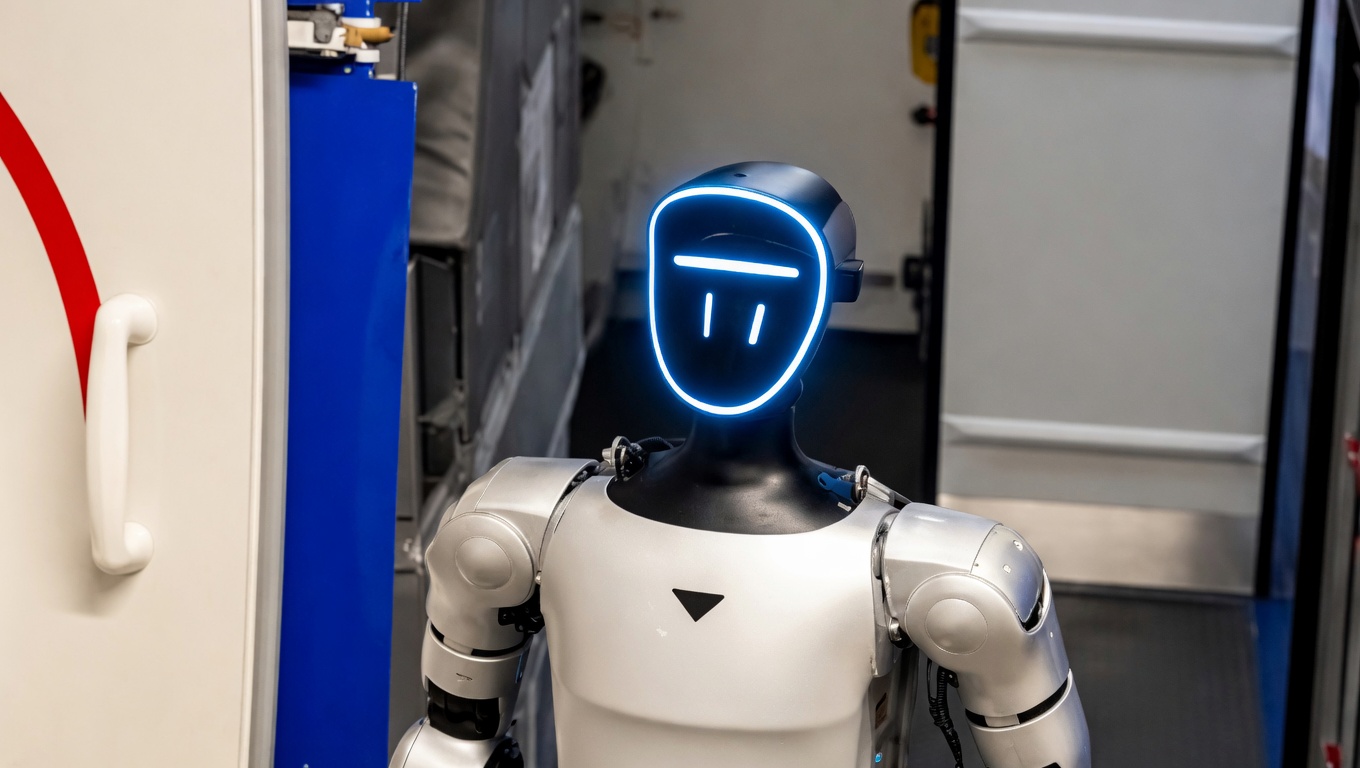
Humanoid robots are now boarding commercial flights, and airlines have no clear rules for them. Southwest Airlines crews recently delayed a flight when a passenger brought a 75-pound robot onboard. Flight staff struggled to classify it. Was it a passenger requiring a seat? Checked baggage? Carry-on luggage? A lithium-battery hazard? No one knew.
This confusion reveals a widening gap between travel innovation and airline regulation. Passengers are purchasing seats for robots, treating them like fellow travelers. Airlines lack standard protocols for robot dimensions, weight limits, battery specifications, and safety requirements. The Federal Aviation Administration has not issued guidance on whether robots count as passengers, cargo, or equipment.
The Southwest incident exposes real operational challenges. A 75-pound robot occupies a full seat but poses different risks than human passengers. Its lithium batteries could trigger different safety protocols than traditional luggage. Airlines cannot charge standard baggage fees to robots that sit in premium seats, yet they consume resources and space identical to paying customers.
Other airlines face the same problem. United, American, and Delta have encountered similar situations without established policies. Some crews allow robots with proper documentation. Others reject them entirely. The inconsistency frustrates robot owners and confuses crew members.
Robot ownership is expanding beyond tech enthusiasts. Companies now manufacture humanoid robots for research, entertainment, and companionship. Travel counts as legitimate use. Owners expect to transport these machines as easily as luggage or service animals.
Regulators must act quickly. The FAA should establish clear classifications for robots in flight. Weight thresholds, battery regulations, and seat assignments need definition. Airlines should create transparent policies addressing robot transportation.
Until rules exist, passengers will continue testing airline policies. Southwest's delayed flight signals that change is coming. Whether airlines treat robots as passengers, cargo, or something entirely new will reshape how the industry operates. The first humanoid