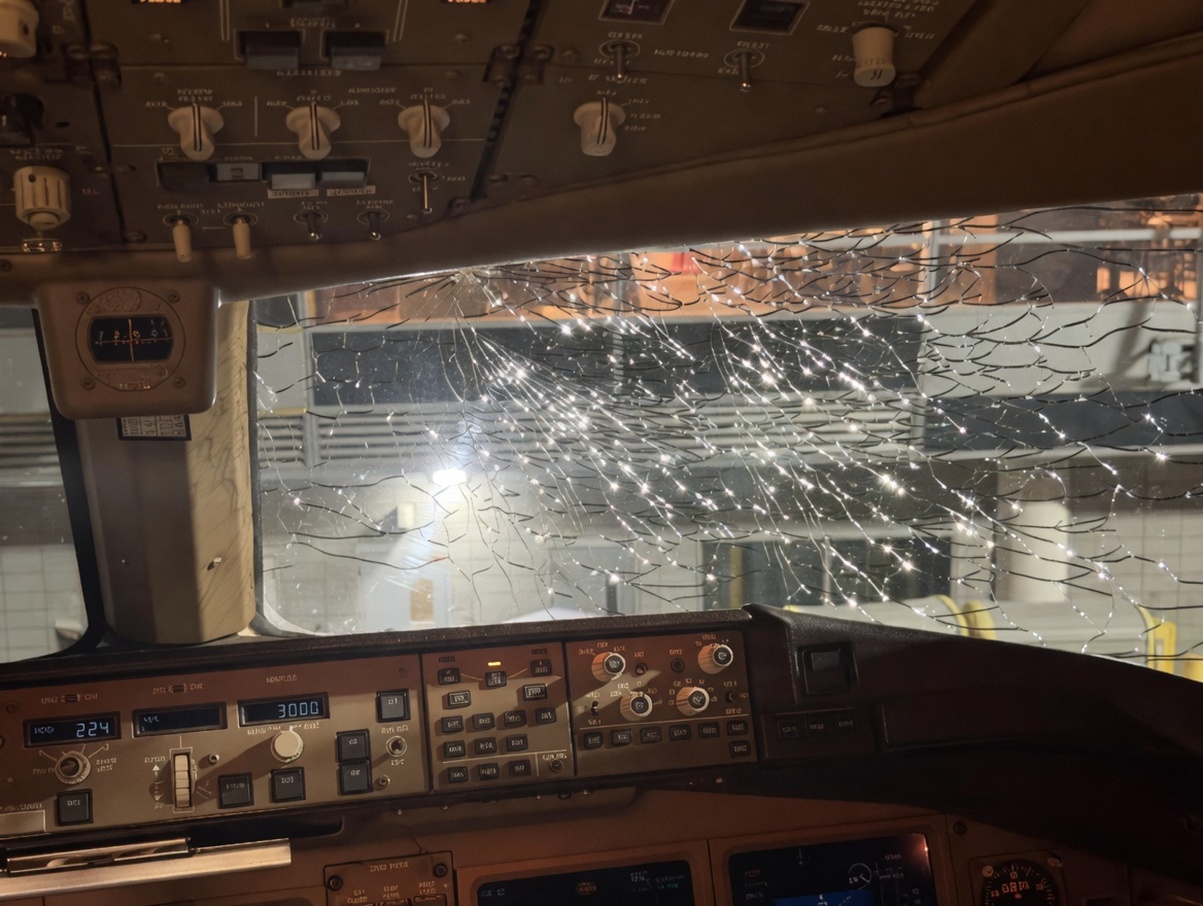
An American Airlines Boeing 777 flying to Munich suffered a shattered first officer's cockpit windshield mid-Atlantic, forcing the crew to divert to New York JFK. While the image appears alarming, the damage posed no immediate safety threat.
Modern 777 cockpit windows consist of multiple reinforced layers designed to contain damage. Even with the outer pane cracked, the inner panes remained intact, preventing cabin depressurization or structural compromise. This redundancy is standard engineering across commercial widebodies.
The aircraft diverted as a precaution to allow American Airlines maintenance crews at JFK to inspect and assess the damage thoroughly. Pilots initiated descent and worked with air traffic control to arrange the unscheduled landing. No passengers or crew faced danger during the diversion, though the sudden change in flight plans disrupted service to Munich.
Windshield incidents, while rare, occur across the aviation industry. Temperature fluctuations, manufacturing defects, or impact from undetected debris at cruise altitude can cause stress fractures in external panes. Airlines ground aircraft immediately upon discovery to prevent escalation and conduct full replacements or repairs.
The 777 remains one of aviation's most reliable wide-body jets. Its design prioritizes redundancy across all critical systems. Cockpit windows undergo rigorous certification testing before installation, and replacement units meet identical standards.
Passengers aboard the flight experienced the disruption but returned to normal operations after reaching JFK. American Airlines rebooked affected passengers on subsequent flights to Munich or offered alternative arrangements. The carrier's operational response demonstrated standard protocol for handling mid-flight structural discoveries.
For frequent transatlantic travelers, incidents like this underscore how safety systems function in practice. Multiple protective layers prevent single-point failures. When something fails, redundant backup systems activate automatically. The diversion itself reflects the aviation industry's conservative approach to unknown damage, treating any