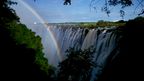
Victoria Falls creates one of nature's rarest optical phenomena when moonlight interacts with the falls' mist. A lunar rainbow, or moonbow, appears only under specific conditions: a full moon, clear skies, and the observer positioned between the moon and the spray. The effect occurs most reliably during the southern African dry season, roughly May through August, when water flow decreases and mist patterns become predictable.
Unlike daylight rainbows, moonbows appear colorless to the human eye because moonlight lacks sufficient intensity to stimulate the eye's color receptors. Cameras with extended exposure settings capture the ethereal colors that our vision cannot detect. The phenomenon demands patience and precise timing. Visitors must book night tours with local guides who understand the exact angles and moon phases required.
Victoria Falls straddles the Zimbabwe-Zambia border near the town of Livingstone. The Zambian side offers better vantage points for moonbow viewing. Luxury lodges like Royal Livingstone and the Taita Falcon operate specialized nighttime tours, typically costing $100-150 per person. These guided experiences last two to three hours and include expert commentary on the falls' geology and the physics behind the moonbow.
The falls attract around 1.5 million visitors annually, but moonbow hunters remain a niche group. Standard daytime visits to Victoria Falls require entrance fees of roughly $30 for international adults. Night photography tours command premium prices but deliver something most travelers never witness.
Getting there involves flying into Harry Mwanga Nkomo International Airport in Bulawayo, Zimbabwe, or David Livingstone International Airport in Zambia, with onward connections to Livingstone or Victoria Falls town. Regional carriers like South African Airways and Air Zimbabwe connect major hubs. Most international visitors arrive via Johannesburg or Cape Town before heading south.
The moonbow