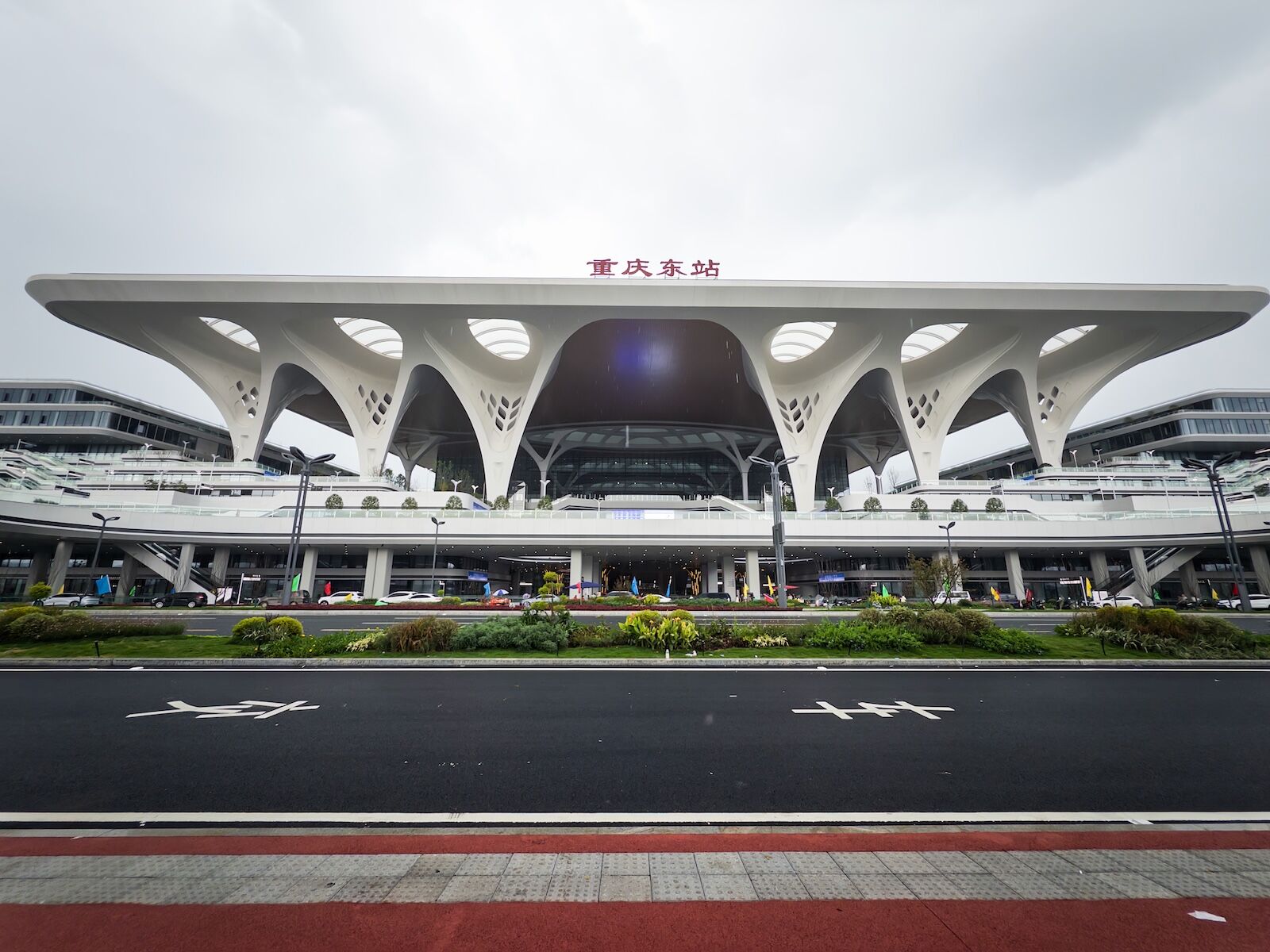
# China's Massive High-Speed Rail Hub Signals a New Future for Train Travel
Chongqing East Station has opened as one of the world's largest railway hubs, dwarfing iconic stations like New York's Grand Central Terminal by four times. The facility represents China's aggressive expansion of high-speed rail infrastructure that reshapes how travelers move across Asia.
The station connects multiple high-speed rail lines serving millions of passengers annually. Chongqing, located in southwestern China, becomes a central transport nexus linking major cities across the country. The hub features modern amenities, streamlined boarding processes, and integration with local transit systems that set new standards for rail travel efficiency.
China operates over 40,000 kilometers of high-speed rail track, the world's largest network by far. These trains reach speeds exceeding 300 kilometers per hour, cutting travel times between major cities dramatically. A journey from Chongqing to Beijing or Shanghai now takes hours rather than days, making rail competitive with domestic flights on pricing and convenience.
The expansion signals a shift in Asian travel patterns. Tourists and business travelers increasingly choose high-speed rail over flying for regional journeys. Lower costs, city-center departures, and reduced environmental impact drive this preference. Tickets on Chinese high-speed trains typically cost 40-60 percent less than comparable airline fares.
For international travelers, this infrastructure opens new possibilities. Foreign visitors can purchase multi-day rail passes covering extensive networks. The ability to move quickly between Chongqing, Chengdu, Shanghai, and other major destinations without air travel appeals to budget-conscious and environmentally minded travelers.
The station's scale reflects broader Chinese investment in rail connectivity. Similar megastations have opened in Wuhan, Nanjing, and Hangzhou. These hubs feature shopping, dining, and hotel facilities rivaling airport terminals