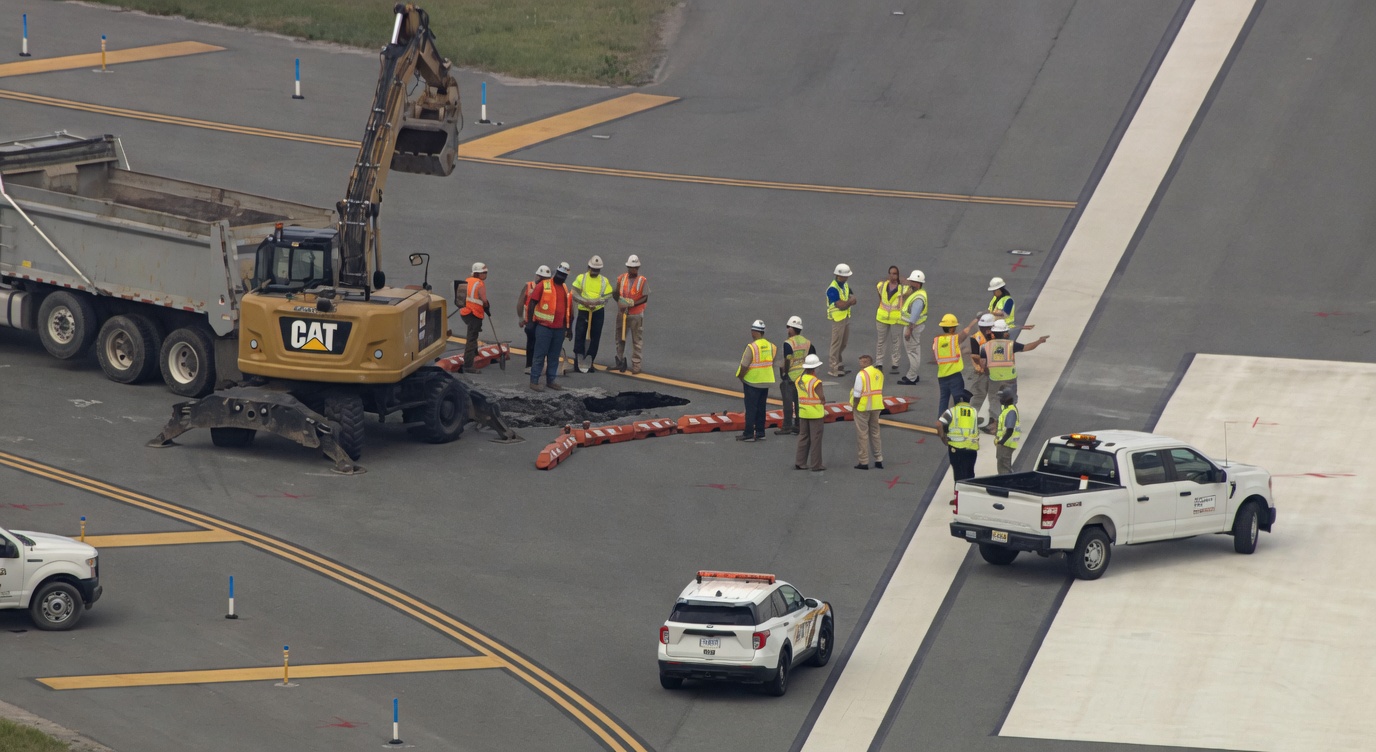
A sinkhole discovered during morning inspections forced LaGuardia Airport to close Runway 4/22, funneling all traffic through its single remaining runway. The damage stranded New York's busiest airport with half its normal capacity just as severe thunderstorms rolled in, creating a perfect storm for delays and cancellations.
By Wednesday afternoon, LaGuardia led the world in flight cancellations with roughly 20% of services scrapped. The airport's infrastructure woes compounded weather disruptions, leaving passengers stranded and airlines scrambling to reroute flights. Crews worked to assess runway repairs while operations ground to a near halt.
The timing proved brutal for travelers. LaGuardia serves as a major hub for Delta Air Lines, JetBlue Airways, and American Airlines, all operating on reduced capacity. Passengers booked on regional flights to destinations like Boston, Washington DC, and Toronto faced the highest cancellation rates. The sinkhole's severity remained unclear, with repair timelines uncertain.
This incident highlights aging infrastructure at one of America's oldest commercial airports. LaGuardia has operated since 1939 and recently underwent a $13 billion modernization effort, yet structural issues persist. The runway closure exposed the airport's vulnerability to single-point failures. With only two runways serving nearly 100,000 daily passengers, losing even one creates bottlenecks.
Airlines immediately issued travel waivers allowing passengers to rebook without fees across New York's three major airports, including Newark Liberty International and John F. Kennedy International. However, accommodating thousands of rerouted travelers stretched hotel capacity and ground transportation in the region.
For travelers planning Northeast corridor trips, LaGuardia disruptions ripple across the entire region. Passengers now face longer booking windows and higher fares as airlines reduce schedules through damaged operations. The incident underscores why building redundancy