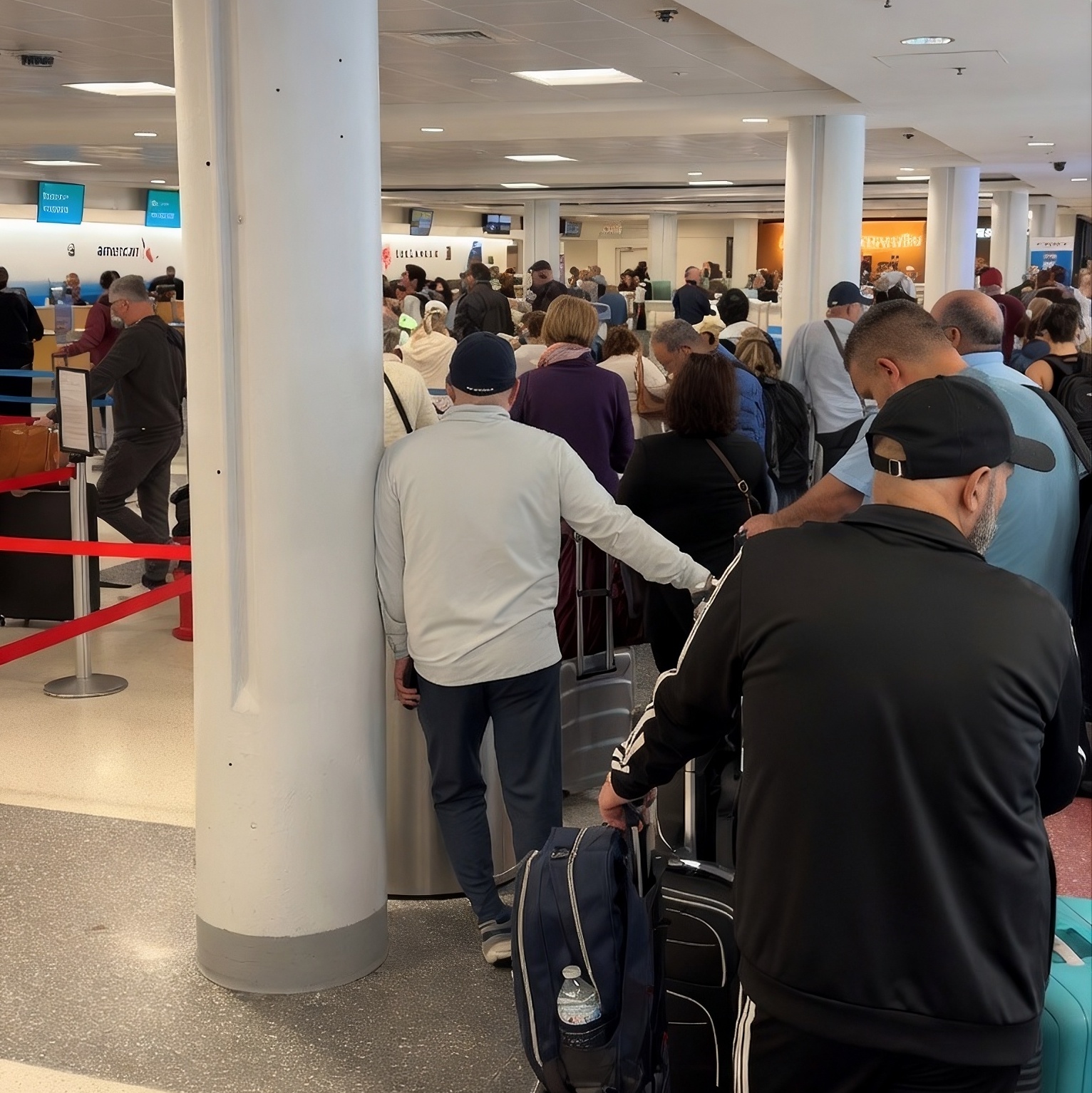
Self-tagging systems promise speed but deliver nothing of the sort. Passengers print baggage tags in minutes, then waste an hour standing in line to hand their bag to an airline employee. The inefficiency exposes a glaring gap between technology and execution.
Automated bag drop stations already exist. Airlines like Lufthansa, Air France, and KLM deploy these kiosks at major hubs, allowing passengers to scan their boarding pass, place the bag on a conveyor, and walk away in under five minutes. No agent interaction required. No waiting.
Yet most North American carriers still force the handoff ritual. United, American, and Delta maintain the old process despite self-tagging capabilities. Passengers complete their work upstream but hit a wall when they reach the desk. The bottleneck remains human labor, not technology.
This matters for time-conscious travelers. Early morning flights demand early arrivals. Peak travel periods at busy airports like LAX, ORD, and JFK stretch bag drop lines beyond reason. Business travelers rushing to connections face real delays. Families juggling children and multiple bags suffer the most.
The cost gap explains some resistance. Automated bag drop systems require infrastructure investment. Installing and maintaining kiosks at every counter costs hundreds of thousands per airport. Staff retraining adds expense. Carriers prioritize immediate costs over passenger experience.
But the economics shift when you factor in operational efficiency. Fewer agents needed at bag drop means labor savings over time. Faster check-in flows reduce ground congestion. Happier passengers rebook with the same airline rather than switching carriers.
Some progress exists. Delta recently expanded bag drop automation at Atlanta and Minneapolis. Southwest experimented with faster processes. But adoption remains sluggish across the industry.
Travelers planning trips should expect the status quo. Arrive early. Use self-tagging if available. Accept the wait. Airlines won