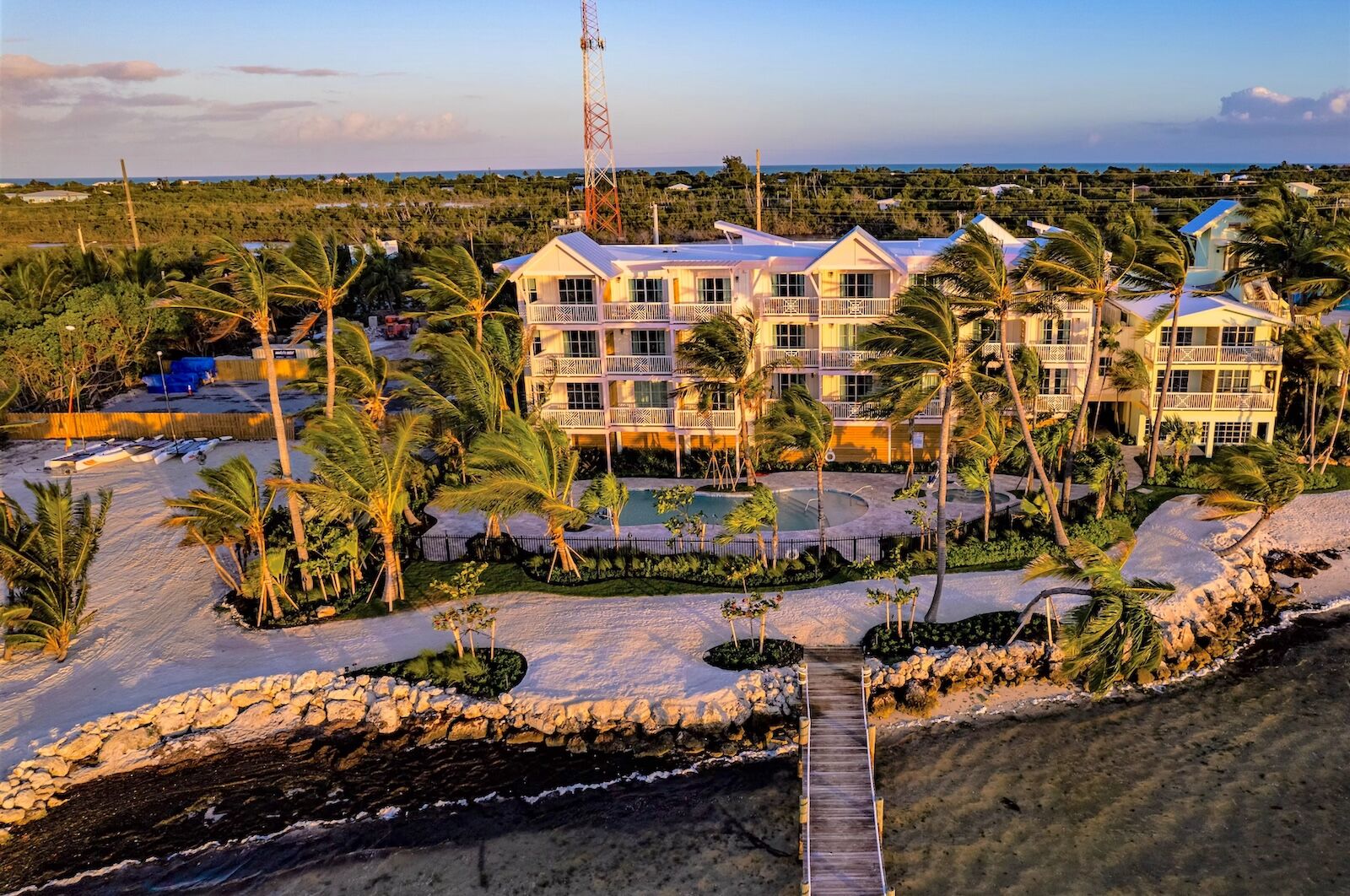
# Barefoot Luxury Meets Sustainability in the Florida Keys
Grassy Flats Resort has opened in the Florida Keys as an ambitious experiment in zero-emission hospitality. The property combines high-end accommodations with rigorous environmental standards, offering guests luxury without the carbon footprint.
The resort operates entirely on renewable energy, primarily solar power supplemented by battery storage systems. Guest accommodations feature sustainable materials throughout, from reclaimed wood to responsibly sourced furnishings. The property avoids single-use plastics and implements comprehensive waste reduction programs across all operations.
Location places Grassy Flats squarely in one of Florida's most coveted travel destinations. The Keys attract roughly 3.5 million visitors annually, drawn by water activities, vibrant local culture, and unique tropical landscapes. Most traditional beachfront properties in this region carry substantial environmental impacts through energy consumption and development pressures.
Grassy Flats differentiates itself by targeting affluent travelers increasingly concerned with sustainable tourism. The resort's pricing reflects luxury positioning, with rooms and experiences priced at premium levels comparable to established five-star competitors across the Keys like Hawks Cay Resort and Little Palm Island.
The barefoot-luxury concept reflects broader travel trends. Affluent travelers now actively seek properties demonstrating environmental responsibility. Eco-resorts capturing this demographic typically see strong bookings, particularly among millennials and Gen X guests aged 35-55 with household incomes exceeding $150,000.
Grassy Flats offers water-based activities centered on the Keys' natural ecosystems, including snorkeling, kayaking, and guided nature tours. Dining emphasizes locally sourced ingredients and sustainable seafood practices. The property features solar-powered facilities and electric vehicle charging stations for guests.
The resort's zero-emission approach extends to construction and operational choices. Staff training emphasizes environmental