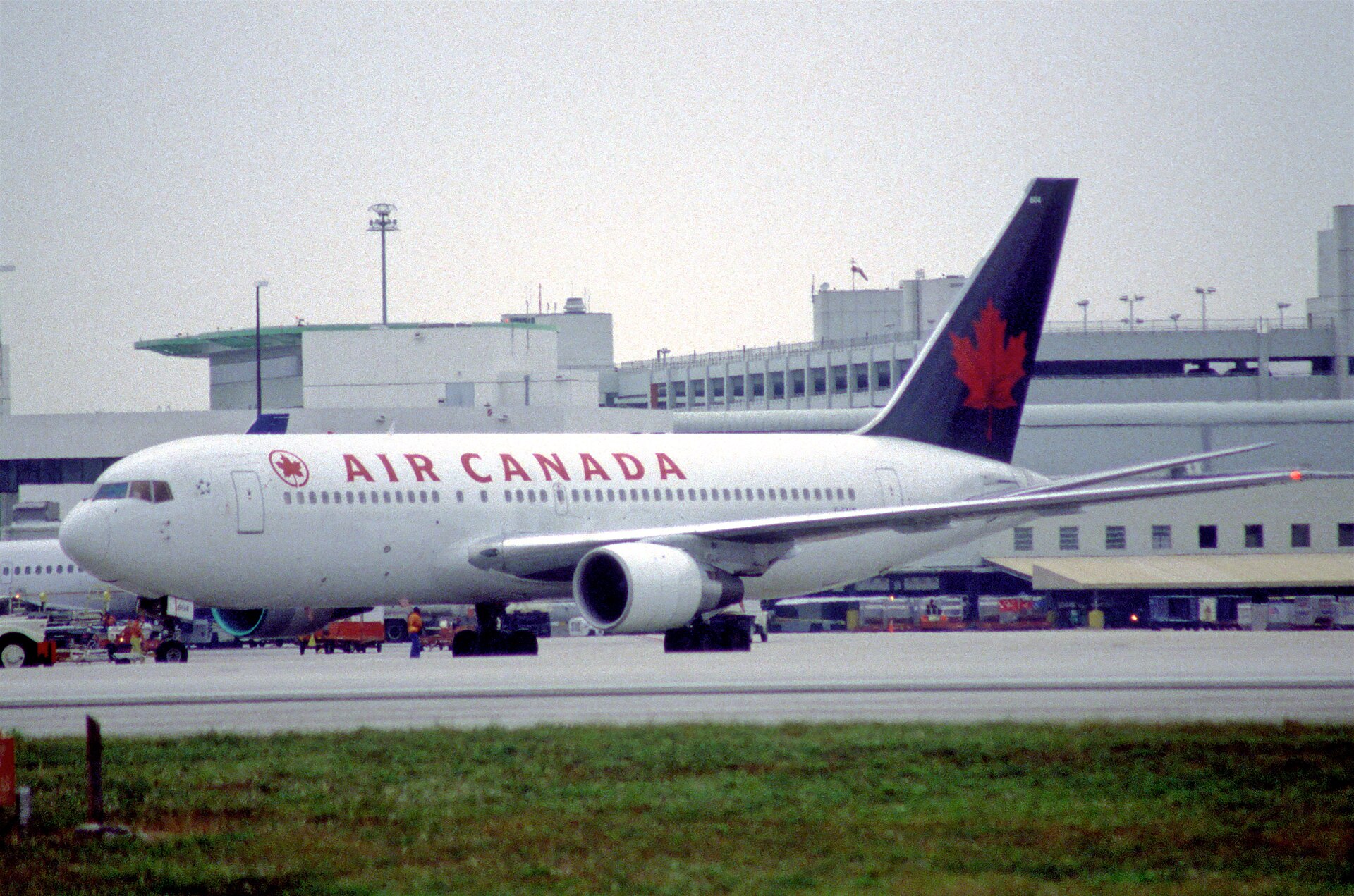
On July 23, 1983, Air Canada Flight 143 became aviation history when both engines failed at 41,000 feet over Manitoba. The Boeing 767 carried only half its required fuel due to a metric conversion error during Canada's switch to the metric system. Ground crew mistakenly calculated fuel requirements using pounds instead of kilograms, loading 22,300 pounds of fuel instead of the 22,300 kilograms needed for the transpacific flight.
Captain Robert Pearson and First Officer Maurice Quintal faced a dead aircraft with 69 people aboard. The 767 glided silently for 23 minutes across 108 nautical miles of Canadian wilderness. Pearson, a former military pilot with gliding experience, spotted Gimli Industrial Park, an abandoned Royal Canadian Air Force base near Winnipeg that had been converted into a drag racing strip.
The unpowered descent demanded precision. Pearson lowered the landing gear manually using gravity, configured the aircraft for landing, and executed a textbook arrival on the race track. The 767 touched down at 185 miles per hour, skidded across the asphalt, and came to rest with minimal damage. All 69 passengers and crew survived.
This incident exposed systemic failures at Air Canada. The airline had recently converted to metric measurements, but no clear protocol existed for fuel calculations during the transition. A maintenance engineer calculated fuel needed in kilograms but failed to convert the result properly. Communication breakdowns compounded the error.
The Canadian Transportation Safety Board's investigation prompted sweeping changes across aviation. Airlines worldwide implemented stricter fuel-checking procedures, standardized metric training, and added redundant verification systems. Pilots now calculate fuel independently and cross-check with dispatch. The 767 itself was repaired and flew for another 35 years.
The "Gimli