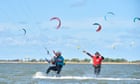
Kitesurfing demands respect from newcomers, but the Stagnone Lagoon near Marsala in western Sicily proves ideal for mastering this intense sport. The shallow, wave-free lagoon sits protected by four islands—Isola Grande, San Pantaleo, Santa Maria, and La Schola—creating a controlled environment for residential courses.
First-time kitesurfers face an immediate reality check. The sport bears no resemblance to casual park kite flying. Instead, participants harness enormous polyester wings capable of launching them airborne with startling force. The initial shock gives way quickly, however, once you're in the water attached to this powerful equipment.
The Stagnone Lagoon's geography works in learners' favor. Standing-depth water eliminates panic about drowning during inevitable wipeouts. The absence of waves removes a major variable that complicates technique development. The four protective islands shelter the lagoon from larger swells and unpredictable conditions found on open coastlines.
A week-long residential course allows gradual progression. Instructors break down the fundamentals—board control, kite management, body positioning—before students attempt advanced moves like the Superman position, where riders leave the board mid-flight. Early sessions involve plenty of face-plants and crashes as muscles learn the coordinated movements required.
Sicily's mild climate extends the kitesurfing season compared to northern European destinations. The southern location offers warm water temperatures even during shoulder months. Marsala itself provides cultural distractions when you need shore time, with its historic wine production and seafood restaurants.
Kitesurfing tourism around Sicily has expanded considerably. Local operators now offer structured progression programs rather than just experienced rider spots. Accommodation options range from beachfront hotels to rural agriturismos. Many courses include equipment rental and safety gear.
The sport's