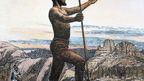
A shipwrecked African explorer traversed North America centuries ago, leaving an indelible mark on exploration history despite remaining largely nameless in modern records. The BBC Travel piece examines this forgotten figure who arrived on American shores through maritime disaster, not deliberate expedition planning.
This unnamed explorer survived shipwreck along the North American coast and subsequently traveled vast distances across the continent. Historical accounts describe his journey across territories spanning modern-day Mexico, the southwestern United States, and beyond. Unlike celebrated European explorers who receive extensive documentation and naming rights to their discoveries, this African traveler's contributions faded from popular historical consciousness.
The explorer's significance stems from his firsthand knowledge of diverse North American landscapes, indigenous peoples, and trading routes. He operated as a cultural bridge between African, European, and Native American worlds during a transformative period in hemispheric contact. His observations and experiences influenced subsequent exploration efforts, yet colonial historians largely erased his identity from official records.
The story reflects broader patterns in exploration historiography where non-European explorers receive minimal recognition despite comparable or superior accomplishments. Archives contain fragmented references to this traveler, scattered across Spanish colonial documents and indigenous oral traditions. His anonymity contrasts sharply with household names like Columbus or Cortés, whose documented journeys receive endless scholarly attention and popular celebration.
Modern historians now work to reconstruct his identity and experiences from fragmentary evidence. This recovery effort reveals how exploration narratives privileged European perspectives while marginalizing other participants in the Age of Discovery. The shipwrecked African's journey demonstrates that North American exploration involved far more diverse players than traditional textbooks acknowledge.
For travelers interested in exploration history, sites across the American Southwest preserve indirect evidence of this explorer's passage. Understanding his story enriches any visit to regions shaped by early intercultural contact.