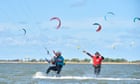
Kitesurfing instructor Matteo Marini runs a week-long residential course in the Stagnone Lagoon near Marsala, western Sicily, where beginners learn to harness powerful polyester wings while standing in shallow, protected waters. The lagoon's unique geography, shielded by four islands (Isola Grande, San Pantaleo, Santa Maria, and La Schola), creates ideal conditions for novices attempting their first Superman moves and aerial maneuvers.
The sport demands respect. On day one, students discover that kitesurfing bears no resemblance to casual kite flying in a park. The massive control surfaces generate enough force to lift riders completely out of the water, launching them into the air with minimal warning. Face-plants into the lagoon prove inevitable during the learning curve.
Stagnone Lagoon offers several advantages that make it the preferred destination for European kitesurfing schools. The shallow depth allows learners to touch bottom if things go wrong, reducing drowning risk. The absence of significant wave action means instructors can focus purely on control and technique rather than wave-riding skills. The four protective islands block stronger oceanic swells while funneling consistent wind across the flat water surface.
Sicily's western coast near Marsala attracts kite schools because of its reliable thermal winds during spring and summer months. Water temperatures remain warm enough for extended practice sessions. Local operators charge approximately 400 to 600 euros per week for residential courses that include accommodation, meals, and daily instruction with certified guides.
Beginners should expect bruising, exhaustion, and repeated water immersion during their first few days. The learning curve accelerates significantly once riders master basic body positioning and directional control. Most people achieve independent flying within three to five days of intensive practice.
The Stagnone Lagoon's combination of safety features,