# Travel's AI Race Stumbles on Operational Reality
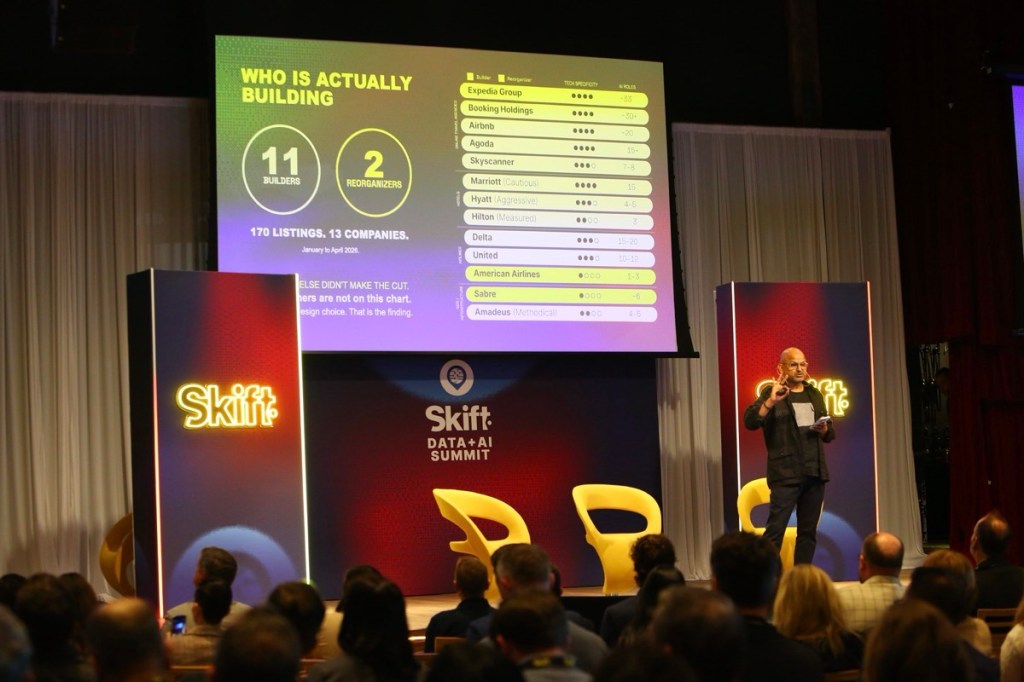
The travel industry's artificial intelligence deployment faces a critical gap between promise and practice. Skift surveyed more than two dozen tech leaders actively implementing AI solutions across airlines, hotels, and booking platforms, revealing that the sector's AI ambitions outpace its operational capabilities.
The core problem centers on integration. Airlines like United and Delta have rolled out AI chatbots for customer service, while Marriott International and Hyatt deploy AI concierge systems. However, these tools often fail to connect seamlessly with legacy booking systems, inventory management, and customer databases. The disconnection creates friction exactly where travel companies need fluidity.
Data quality emerges as a second critical barrier. Travel operators accumulate vast datasets from reservations, customer interactions, and loyalty programs. Yet this data remains fragmented across incompatible systems. Hotels cannot easily cross-reference guest preferences stored in separate loyalty platforms. Airlines struggle to feed real-time operational data into predictive algorithms. Without clean, unified data, AI delivers generic recommendations rather than personalized experiences.
Staff resistance compounds operational challenges. Travel agents, hotel concierges, and airline staff view AI tools with legitimate skepticism. When implementations lack proper training and change management, adoption stalls. Booking agents at traditional travel agencies report that AI-powered fare prediction tools sometimes contradict their market knowledge, creating trust deficits.
Budget allocation reveals a fourth tension. Travel companies spend heavily on AI pilots and proofs of concept but underinvest in the ongoing operational infrastructure required for sustained deployment. Maintenance, staff training, and system optimization consume resources that competition for new flashy features diminishes.
The verdict from industry leaders: travel's AI race requires less innovation obsession and more operational discipline. Companies must prioritize data consolidation, integrate systems thoughtfully, invest in employee enablement, and commit to long-term operational support over quick