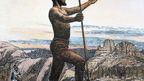
# The Shipwrecked African Who Crossed North America
A North African explorer whose identity remains lost to history crossed North America centuries before Columbus, according to emerging historical research. This unnamed navigator survived a shipwreck on the Gulf Coast and traveled thousands of miles inland, leaving traces of African presence in indigenous cultures across the continent.
The explorer arrived in what is now the American South after maritime disaster scattered his crew. Archaeological evidence and linguistic connections suggest he journeyed through present-day Louisiana, Mississippi, and beyond, interacting with Native American societies who documented his arrival in their oral histories and cultural records. His voyage predates European colonization by generations.
Historical records from African and Spanish sources reference mysterious "black strangers" who appeared in indigenous communities, possessed advanced navigation skills, and introduced foreign technologies and knowledge systems. These accounts align with archaeological findings of African artifacts and cultural markers in archaeological sites throughout the Southeast and interior North America.
The explorer's anonymity stems from colonial-era documentation practices that rarely recorded the achievements of African travelers. European historians who later chronicled American exploration deliberately omitted or minimized evidence of earlier African voyagers, prioritizing narratives centered on European discovery. Spanish colonial archives contain fragmentary references to his journey, but subsequent historians dismissed these accounts as unreliable.
His legacy persists in surprising places. Genetic studies of certain Native American populations show African ancestry markers from periods predating the Atlantic slave trade. Oral histories maintained by Southeastern tribes preserve stories of foreign visitors with distinctive physical features and maritime expertise. Some researchers suggest that hybrid cultural practices and technologies in indigenous societies reflect knowledge transmission from this African navigator.
This rediscovered history challenges conventional timelines of American exploration. Rather than a story of European discovery of an empty continent, it reveals a complex network of transoceanic voyagers, including Africans who navigated sophisticated maritime routes centuries before Columbus departed Spain.
The explorer's true name may