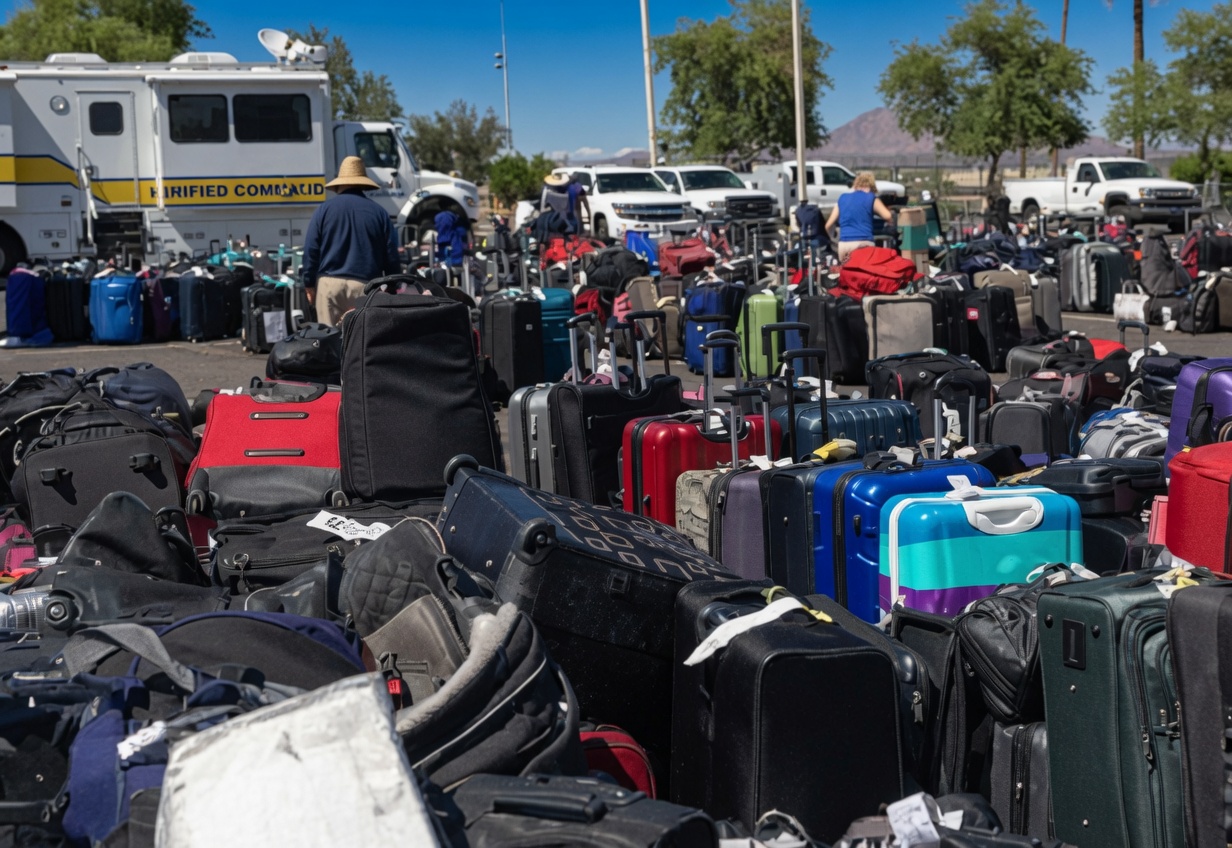
Americans stockpile roughly $30 billion worth of unused luggage in their closets, yet a shipping paradox keeps most bags from reaching secondhand markets. Luggage presents a unique resale challenge. Individual suitcases, carry-ons, and duffels carry modest per-item values, often $20 to $100, while shipping costs for these bulky items run $15 to $40 per bag. The math doesn't work. Sellers abandon resale efforts on platforms like eBay, Facebook Marketplace, and Poshmark because profit margins evaporate once carriers like UPS and FedEx calculate dimensional weight pricing.
The logistics barrier explains why luxury luggage brands like Samsonite, Away, and American Tourister accumulate in storage rather than circulate through resale channels. A used Away suitcase might fetch $50 on the secondhand market, but ground shipping alone costs $25 to $35. Regional variations compound the problem. Shipping from rural areas costs more than urban hubs, further discouraging sellers.
Several dynamics fuel the unused luggage glut. Travelers upgrade frequently, replacing serviceable bags with newer models. Business travelers accumulate multiple carry-ons. Families inherit bags they never use. Vacation trends shift. A skier acquires specialized luggage; tastes change, the bag stays home.
Thrift chains like Goodwill and Salvation Army receive donations, but they struggle to move inventory. Luggage auctions exist but attract minimal bidders. Some boutique platforms experiment with luggage-specific resale, yet none have cracked scale.
Shipping innovations offer partial solutions. Consolidated freight services and subscription-based luggage rental programs like Awaway and Bounce reduce ownership pressure. Manufacturers increasingly embrace circular economy models, offering repair services and take-back programs for trade-