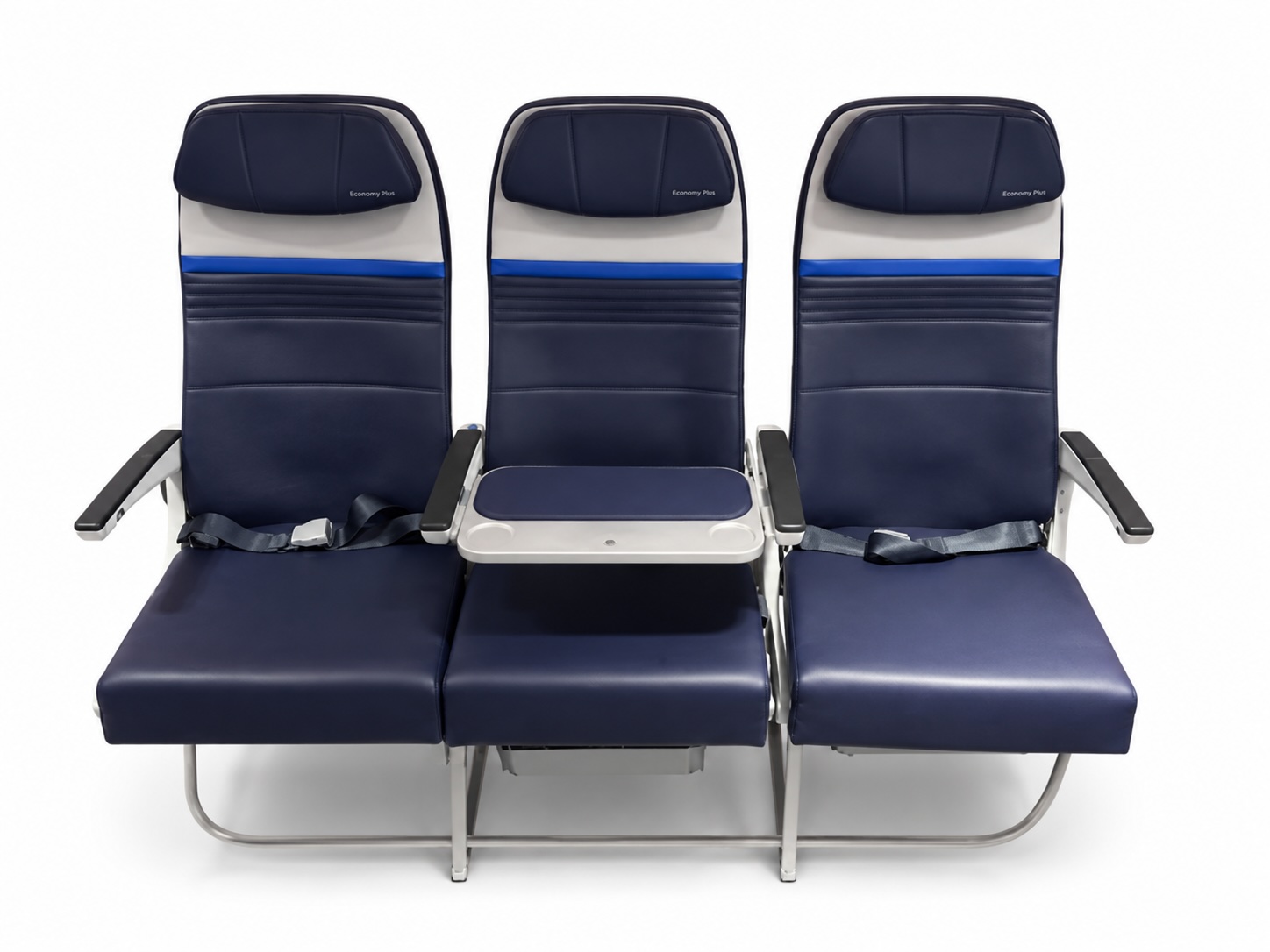
United Airlines is considering blocking middle seats on its new Airbus A321XLR aircraft to sidestep staffing regulations rather than to enhance passenger comfort. A leaked image reveals the airline exploring this configuration in economy cabins across its incoming fleet of long-range narrowbody jets.
The strategy reflects a loophole in Federal Aviation Administration rules. The FAA mandates one flight attendant per 50 passengers, but blocking middle seats reduces cabin density below thresholds that trigger additional crew requirements. By strategically removing middle-seat revenue, United avoids hiring extra flight attendants on routes where the A321XLR operates. These aircraft primarily fly transatlantic and long-haul routes where crew costs substantially impact profitability.
The A321XLR represents United's bet on next-generation efficiency. These jets carry 244 passengers with superior range and fuel economy compared to wider aircraft like the Boeing 787. However, the airline faces pressure to maintain staffing levels amid industry-wide labor shortages and recent labor agreements that increased compensation.
For passengers, blocked middle seats create an awkward middle ground. They don't offer the privacy and space of premium economy or business class, yet eliminate the cramped three-across configuration that defines standard economy. United hasn't confirmed these plans publicly. If implemented, the carrier would likely market the configuration as a comfort upgrade while quietly managing crew requirements beneath the surface.
This approach contrasts with competitors' strategies. Delta Air Lines and American Airlines have invested in premium economy products and enhanced business-class offerings rather than gambling on perceived middle-seat improvements. Southwest Airlines maintains its all-economy model with assigned seating.
The A321XLR's arrival accelerates United's narrowbody fleet modernization. First aircraft entered service in late 2023, with dozens more on order. Transatlantic routes using this jet offer competitive economics against larger widebody aircraft, particularly