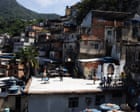
Rio de Janeiro's favela tourism has exploded after viral videos showcased a rooftop dubbed the "Gateway to Heaven" in Rocinha, the city's largest informal settlement. International tourists now queue for hours to capture their own videos on this narrow ledge, transforming a residential neighborhood into one of Brazil's hottest Instagram destinations.
The trend reflects a broader shift in travel behavior. Social media has weaponized curiosity about authentic, off-the-beaten-path experiences. Travelers abandon traditional attractions like Christ the Redeemer and Sugarloaf Mountain for the raw, intimate vantage point Rocinha offers. The rooftop commands panoramic views of Rio's mountains and sprawling cityscape, framed against the favela's densely packed homes.
Operators now run motorbike shuttles ferrying visitors uphill through Rocinha's narrow streets. Paul Boswell, a 58-year-old builder from Essex, traveled there on day three of his Brazil holiday. His experience mirrors thousands of others seeking "authentic" Rio experiences that algorithms have packaged and sanitized for mass consumption.
This phenomenon raises complex questions about favela tourism. Economic benefits reach some residents through bike rental, guide services, and informal hospitality. Simultaneously, it commodifies poverty and concentrates foot traffic in neighborhoods where residents navigate daily challenges including violence and limited infrastructure.
Tour operators and local guides occupy a grey zone. Some work informally, capitalizing on demand without regulation. Others partner with community organizations attempting to ensure benefits reach residents rather than extracting wealth to outside operators.
The "Gateway to Heaven" represents modern travel's paradox. Travelers crave authentic connections and unseen perspectives, yet their collective arrival transforms neighborhoods into performances of themselves. What started as a hidden gem discovered by early social media users becomes algorithmic inevitability, drawing crowds that fundamentally alter the place itself.
For