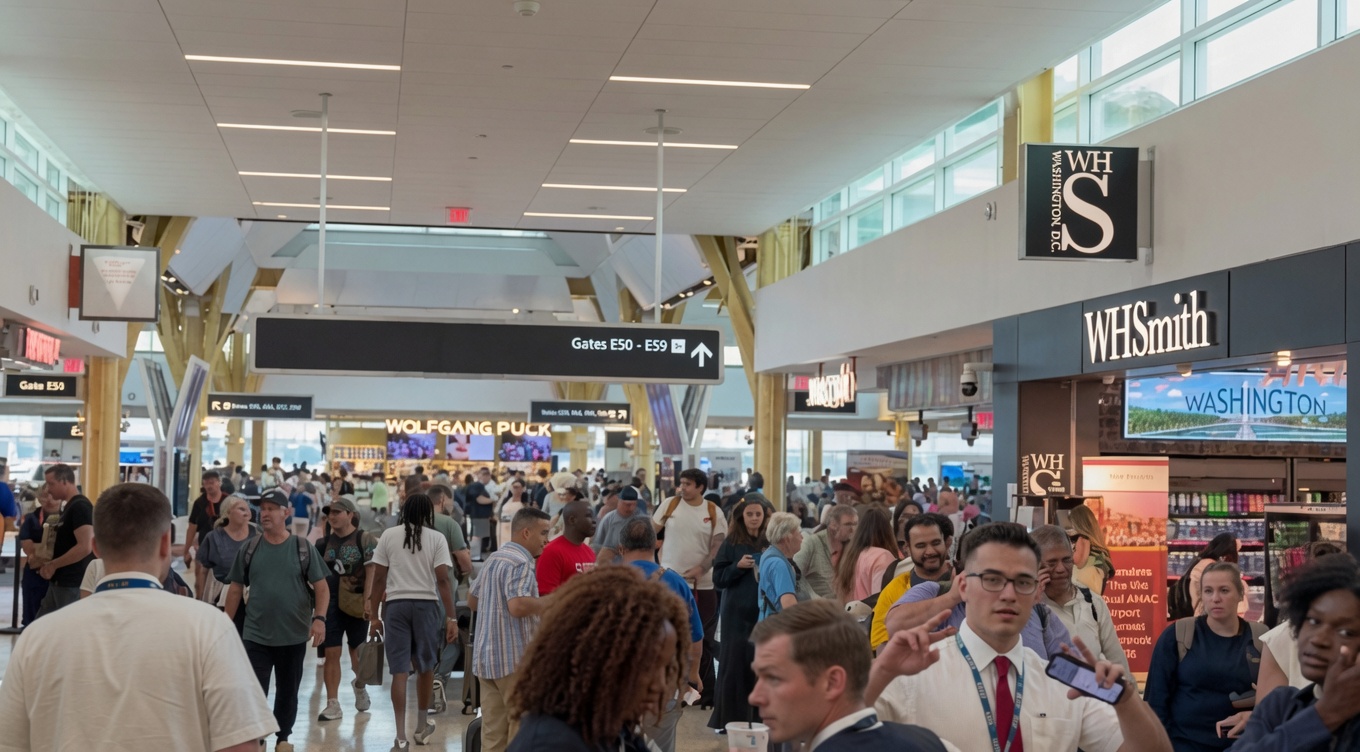
American Airlines stripped customer service counters at Ronald Reagan Washington National Airport (DCA), its second-largest hub, replacing them with QR codes and digital self-service tools. The airline directed passengers toward mobile apps and phone lines instead of face-to-face assistance. When severe storms battered the D.C. region recently, that strategy unraveled.
Hundreds of flights cancelled. Thousands of stranded passengers descended on the airport simultaneously, all needing rebooking. The QR codes led nowhere useful. The apps crashed under demand. Phone lines stayed on hold for hours. Passengers found no one to help them.
This reflects a broader airline industry trend. Major carriers including United, Delta, and Southwest have similarly trimmed staffing and reduced physical customer service infrastructure at major hubs over the past three years. Cost savings drive the push. Digital tools handle routine transactions cheaply. But when disruption strikes, these systems fail spectacularly.
DCA's storm highlighted the gap between operational theory and reality. During normal operations, passengers willingly self-serve. During chaos, they need human judgment, immediate rebooking authority, and real conversations about options. A QR code cannot rebook you to a competitor's flight or approve hotel vouchers. A chatbot cannot navigate exceptions.
American Airlines didn't respond to requests for comment on its customer service reduction strategy at DCA. The airline did increase staffing after the storm, though only temporarily.
For travelers, this matters. Book with carriers that maintain robust counter service at your home airport, especially if you fly frequently during peak seasons when disruptions cluster. Download airline apps before travel, but don't rely on them as your sole lifeline during cancellations. Know the airline's phone number and call immediately when trouble strikes, before the lines jam. And consider whether budget carriers' penny-pinching on service aligns with your tolerance for chaos.