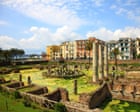
A new documentary film reveals Naples' extraordinary archaeological treasures, many buried beneath centuries of volcanic rock and accessible by train. Director Gianfranco Rosi captures visitors descending through narrow tunnels into Herculaneum's Teatro Romano, where 2,000 years of preserved Roman life lies frozen in time.
The film explores rarely visited ancient villas and seismic landscapes across the Bay of Naples region. Herculaneum, preserved by Mount Vesuvius's 79 AD eruption, remains one of Europe's most intact Roman sites. Unlike the more famous Pompeii, Herculaneum sits closer to Naples and connects directly via the Circumvesuviana regional train line, making it accessible for day trips.
Visitors can reach Herculaneum in under 25 minutes from Naples' central station using the Circumvesuviana railway. The site charges around 13 euros for entry and offers guided tours that navigate the volcanic tunnels carved through hardened lava. The documentary captures the theatrical experience of descending into darkness, with guides explaining how the eruption essentially froze daily Roman life mid-moment.
The train journey itself forms part of the experience, passing through working-class neighborhoods of Torre del Greco and Ercolano before reaching the archaeological zone. This accessibility contrasts sharply with Pompeii's distance from the city and its crowds. The film emphasizes how the railway transforms these hidden ancient wonders into reachable destinations for cultural travelers.
For budget-conscious visitors, regional trains cost 3-4 euros from Naples center. Combination tickets covering multiple archaeological sites around the bay offer savings. The Circumvesuviana line also serves Torre Annunziata and Stabiae, expanding options for exploring Vesuvian treasures.
This documentary highlights a growing travel trend: seeking authentic archaeological experiences beyond