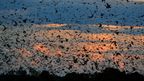
# The World's Largest Mammal Migration Happens in Zambia
Millions of straw-colored fruit bats descend on Zambia each autumn in what ranks as the planet's largest mammal migration by sheer numbers. The spectacular phenomenon occurs as these bats travel from their breeding grounds across central Africa, converging on the Kasanka National Park region in search of fruit and shelter.
The migration peaks between October and December when the zambezi region's fruit trees reach peak ripeness. Visitors to Kasanka National Park witness an extraordinary natural spectacle. The sky darkens as waves of bats take flight at dusk, creating clouds so dense they resemble smoke. Local operators offer guided safari experiences specifically designed around this event, with accommodations ranging from basic lodges to mid-range camps within and near the park.
This migration dwarfs Africa's famous wildebeest crossings in terms of sheer numbers. Scientists estimate between 8 and 10 million bats participate annually, though counts fluctuate based on environmental conditions and fruit availability. The bats' presence transforms the local ecosystem temporarily, as their guano enriches soils and their feeding patterns shape vegetation patterns across vast territories.
For travelers, accessing this natural wonder requires planning. Kasanka National Park lies in northern Zambia, roughly 300 kilometers from Lusaka. South African Airways and other regional carriers service Lusaka's Harry Mwanga Nkumbula International Airport, with onward connections to smaller airstrips near the park. Most visitors arrive during peak migration months, so advance bookings prove essential.
The bats rely on specific fruit species and water sources, making them vulnerable to habitat loss and climate shifts. Conservation efforts around Kasanka focus on protecting migration corridors and fruit trees. Tourism revenue generated by bat-watching supports local communities and park management.
Travelers planning