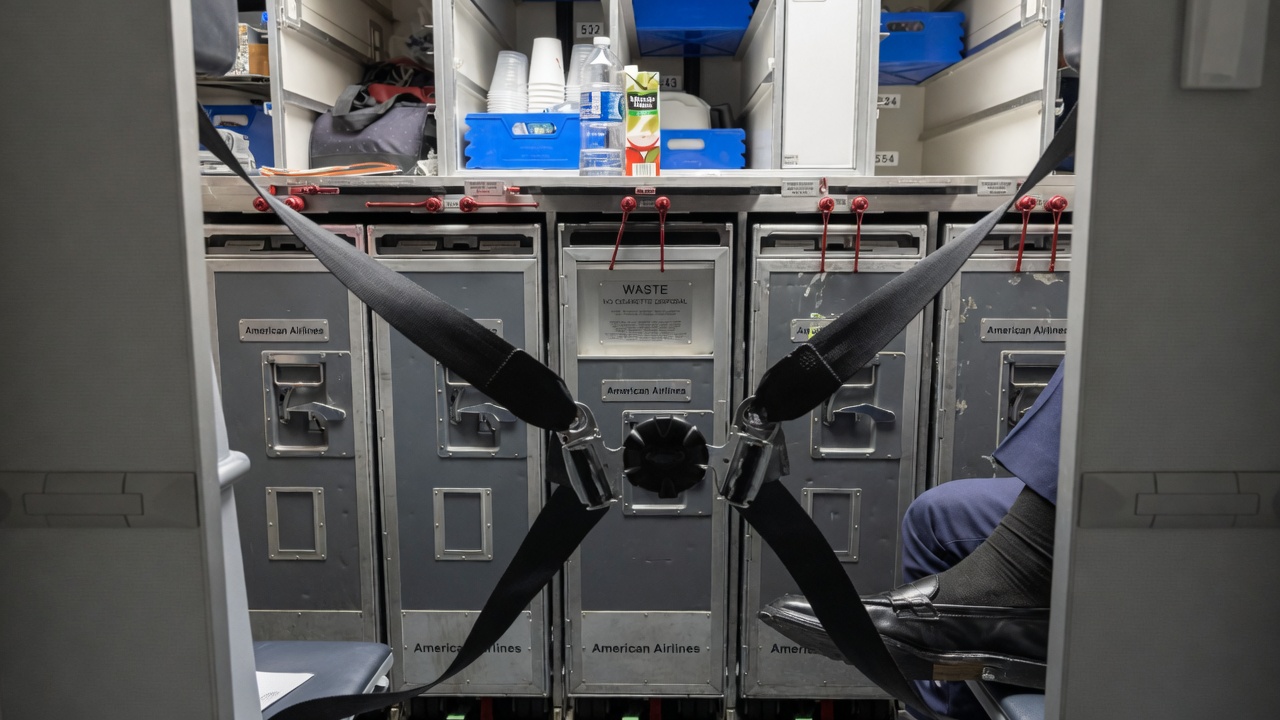
Flight attendants routinely ask pilots to illuminate the seat belt sign for reasons that have nothing to do with safety. The practice reveals workplace strain across commercial aviation.
Cabin crew members use the seat belt sign as a de facto "do not disturb" indicator when they need breaks from passenger requests. Airlines pack flight attendants into tight galley spaces with minimal rest areas, forcing them to seek refuge when overwhelmed. Instead of legitimate turbulence, the sign activates simply because crew members want uninterrupted time to restock beverage carts, eat meals, or recover from the physical and emotional demands of their jobs.
This workaround exposes deeper tensions in airline operations. Flight attendants face constant passenger interaction on flights lasting six, ten, or even fifteen hours. Modern aircraft feature shrinking galleys despite longer routes. Major carriers including Delta, United, and American Airlines operate some of the busiest routes globally, where cabin crew manage hundreds of requests daily without adequate downtime built into schedules.
The practice raises legitimate safety concerns. When the seat belt sign activates without actual turbulence, passengers become confused about genuine danger signals. Overuse of this warning diminishes its credibility during real emergencies. Pilots, flight attendants, and passengers all lose confidence in the system when it serves as a social boundary tool rather than a safety mechanism.
Industry insiders acknowledge this gray area openly. Flight crews view the tactic as necessary self-preservation rather than deception. Airlines have not addressed the root cause: insufficient staffing, inadequate rest facilities, and unsustainable schedules that force crew members to improvise coping strategies.
For travelers, this trend offers useful perspective. When the seat belt sign illuminates without weather changes or obvious turbulence, you're witnessing aviation's hidden workforce crisis rather than imminent danger. Understanding this context helps passengers recognize when crew members genuinely need space versus actual safety