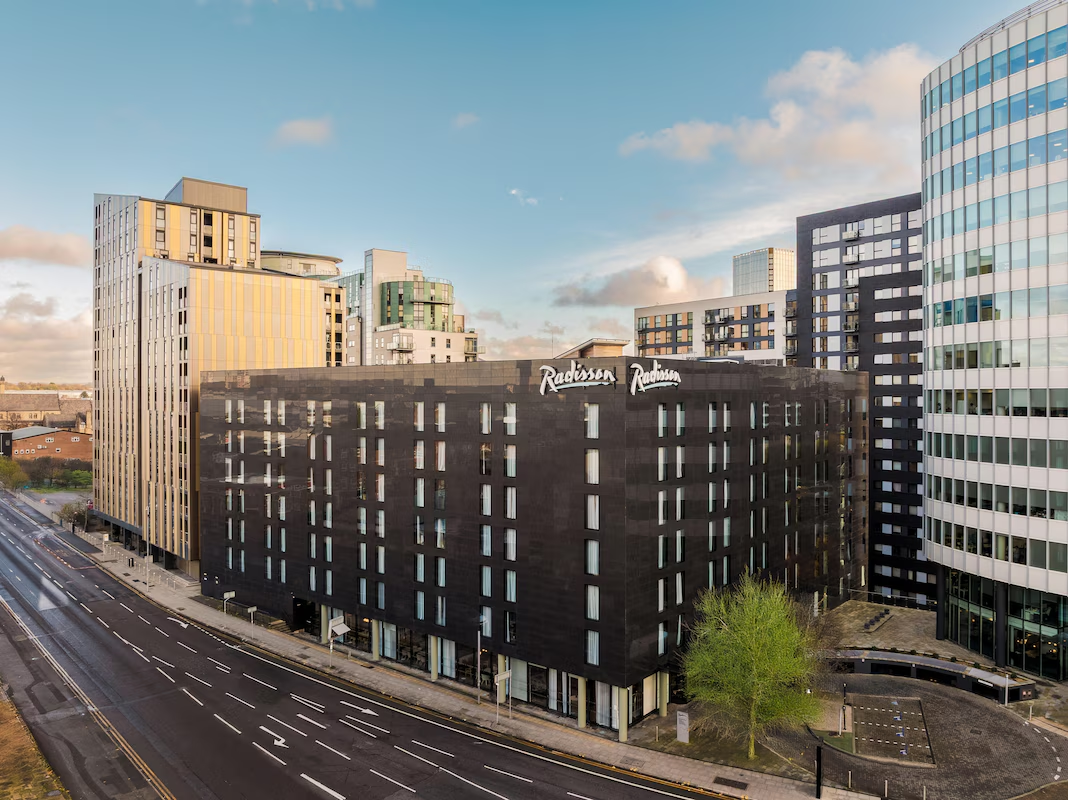
Radisson has delivered unexpected news from its net-zero hotel experiment. After one year of operating with full electrification and renewable energy systems, the property maintained energy costs comparable to traditional hotel operations. This outcome challenges the prevailing assumption that sustainability measures inevitably inflate operating expenses.
The hotel eliminated fossil fuels entirely, relying instead on electric heating, cooling, and hot water systems paired with renewable energy generation. Despite the capital investment required for these upgrades, operational costs remained flat. Radisson credits efficient building envelope design, smart energy management systems, and optimized equipment performance for offsetting the higher electricity consumption typical of all-electric facilities.
The experiment holds particular relevance as hospitality operators worldwide face tightening environmental regulations. The European Union's Energy Efficiency Directive and similar standards in other markets increasingly mandate net-zero pathways for commercial buildings. Hotels that demonstrate cost-neutral decarbonization gain competitive advantages in securing contracts with corporations and governments that prioritize sustainability in their travel policies.
Energy costs represent one of the largest controllable expenses for hotel operators, typically running 4 to 6 percent of total operating budgets. A property that achieves net-zero operations without financial penalty effectively eliminates a major sustainability barrier that has deterred industry-wide adoption.
Radisson's findings suggest the economics of hotel electrification have shifted favorably. Renewable technology costs have declined substantially over recent years, while energy efficiency upgrades now deliver measurable returns within typical investment horizons. The hotel's success indicates that operators no longer face a stark choice between profitability and environmental responsibility.
Other major chains including Marriott, IHG, and Hyatt have committed to net-zero targets by 2050, but most lack detailed roadmaps for achieving cost parity during the transition. Radisson's proof of concept provides a tangible blueprint that eliminates one critical obstacle. Hotels planning renov