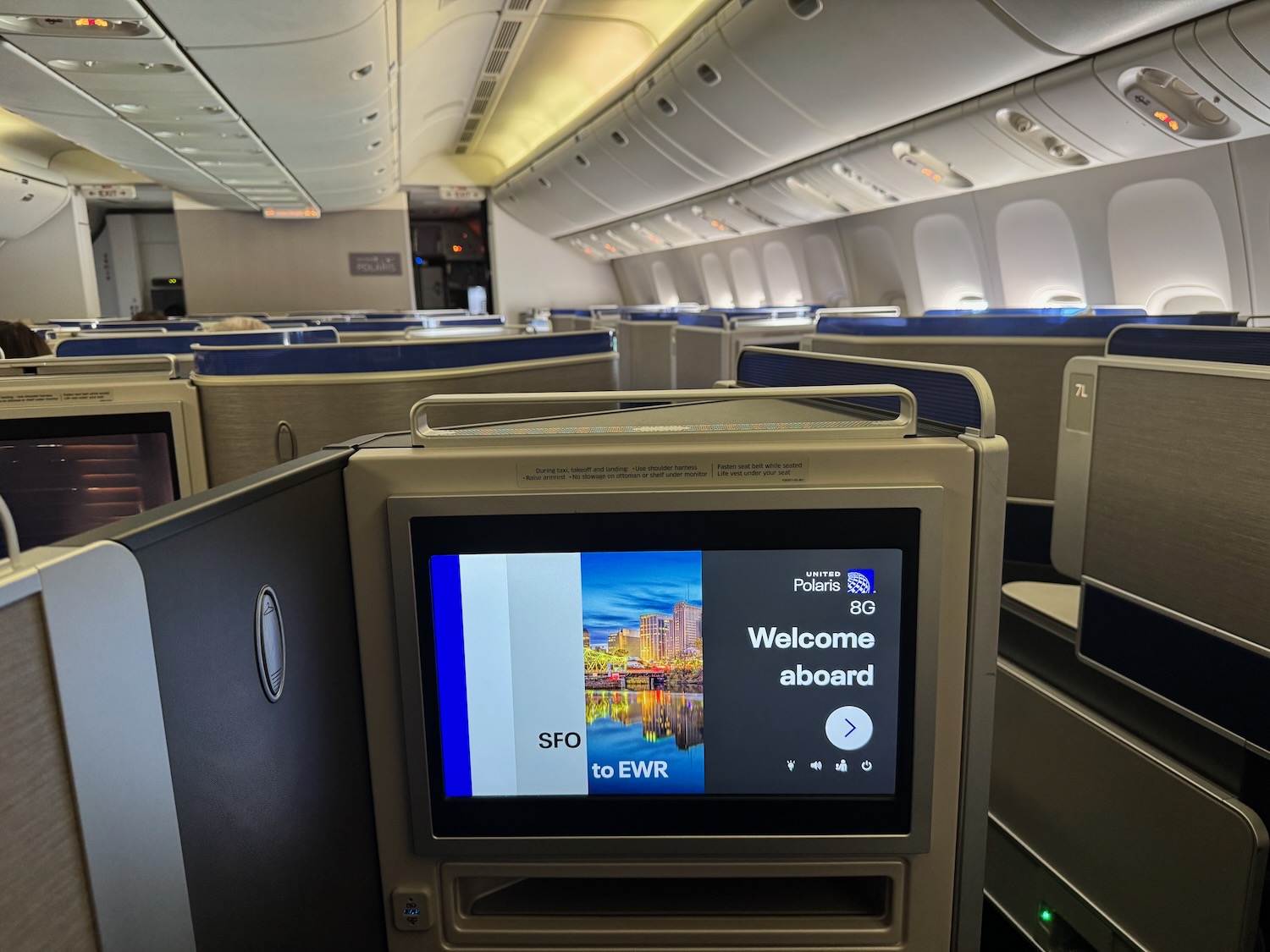
United Airlines now markets its premium domestic transcontinental routes under the Polaris Business Class brand, transforming the flying experience on routes like San Francisco to Newark. A recent review of the carrier's internationally-configured 777-200ER aircraft in Polaris Business Class reveals a mostly positive premium cabin experience, though with notable service gaps.
The San Francisco to Newark route operates on United's long-haul aircraft typically reserved for international service. Passengers in Polaris enjoy the spacious cabin configurations designed for transoceanic flights, offering more generous seating and amenities than standard domestic business class. However, the review highlights a significant operational failure: non-functional Wi-Fi connectivity throughout the flight, a critical shortcoming for business travelers on transcontinental routes.
United's rebranding strategy positions Polaris as a premium domestic product competing with American Airlines Flagship First Class and Delta One on similar coast-to-coast routes. The pricing for Polaris seats on transcontinental flights ranges significantly based on demand, with premium fares often reaching $1,500 to $3,000+ depending on booking timing and day of travel.
The deployment of widebody 777-200ER aircraft on domestic routes reflects United's strategy to maximize capacity and profitability on high-demand transcontinental lanes. This contrasts with competitors who typically use narrowbody aircraft like Boeing 737s and Airbus A321s for domestic premium service.
The Wi-Fi outage represents a service reliability issue that undermines the premium positioning. For business travelers justifying premium fares, in-flight connectivity ranks high on priority lists. United has invested significantly in upgrading its Wi-Fi infrastructure across the fleet, yet operational inconsistencies persist on select aircraft.
For travelers evaluating expensive transcontinental business class options, the Polaris product delivers on product features and physical comfort but shows vulnerabilities in service