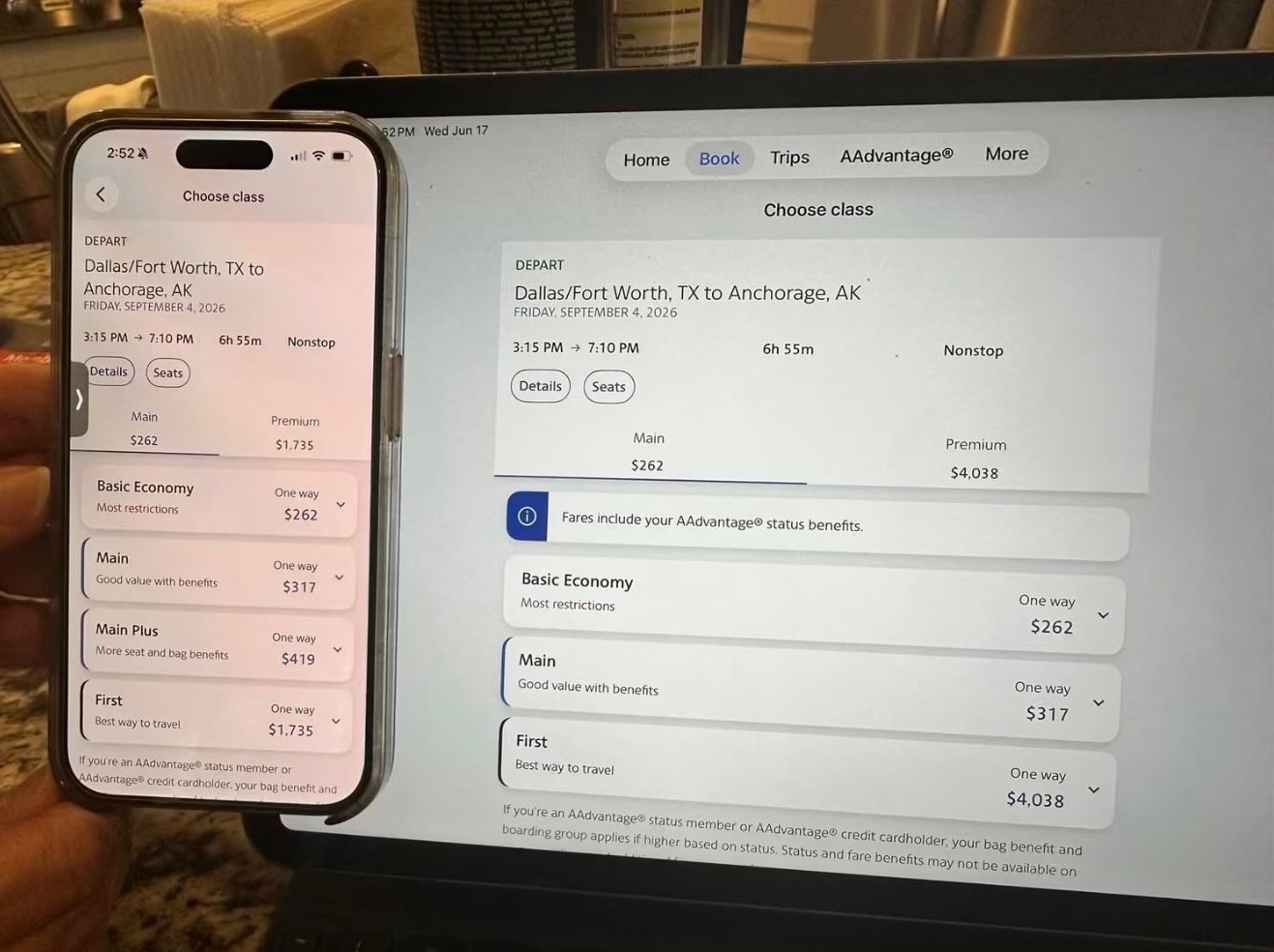
A viral screenshot has ignited concerns about dynamic pricing discrimination at American Airlines, suggesting the carrier charges different first-class fares based on AAdvantage elite status. The image purportedly shows the same flight quoted at significantly different prices for logged-in versus non-logged-in users, raising alarm bells about surveillance-based pricing practices.
American Airlines has not publicly confirmed or denied the claim. The airline's pricing algorithm remains opaque, making it difficult for travelers to verify whether status-based fare discrimination occurs. This controversy taps into growing anxiety about personalized pricing across the travel industry, where airlines increasingly use customer data to optimize revenue.
Dynamic pricing itself is standard practice. Airlines adjust fares based on demand, booking windows, and seat availability. But pricing that hinges on customer loyalty status or browsing history crosses an ethical line for many consumers. If American Airlines systematically charges elite frequent flyers more for first-class cabins, it inverts the loyalty model entirely.
The screenshot's authenticity remains disputed. Variables like browser cache, search history, and session timing could produce different fares without intentional discrimination. Screenshots also lack context and can be misleadingly cropped or timed.
For frequent flyers eyeing American Airlines elite status, this incident demands transparency. Consumers deserve clarity on whether their loyalty membership influences pricing algorithms. If American Airlines does employ status-based pricing, the carrier risks alienating its most valuable customers, who generate outsized profits from premium cabin bookings.
Other carriers like United, Delta, and Southwest have faced similar scrutiny but maintain that elite members receive perks through lounge access, baggage allowances, and upgrade opportunities, not price manipulation.
The travel industry's shift toward opaque algorithmic pricing raises broader questions about fairness and consumer protection. Travelers should assume prices vary based on numerous factors and clear browser data before searching for fares. Meanwhile, regulators may need to examine