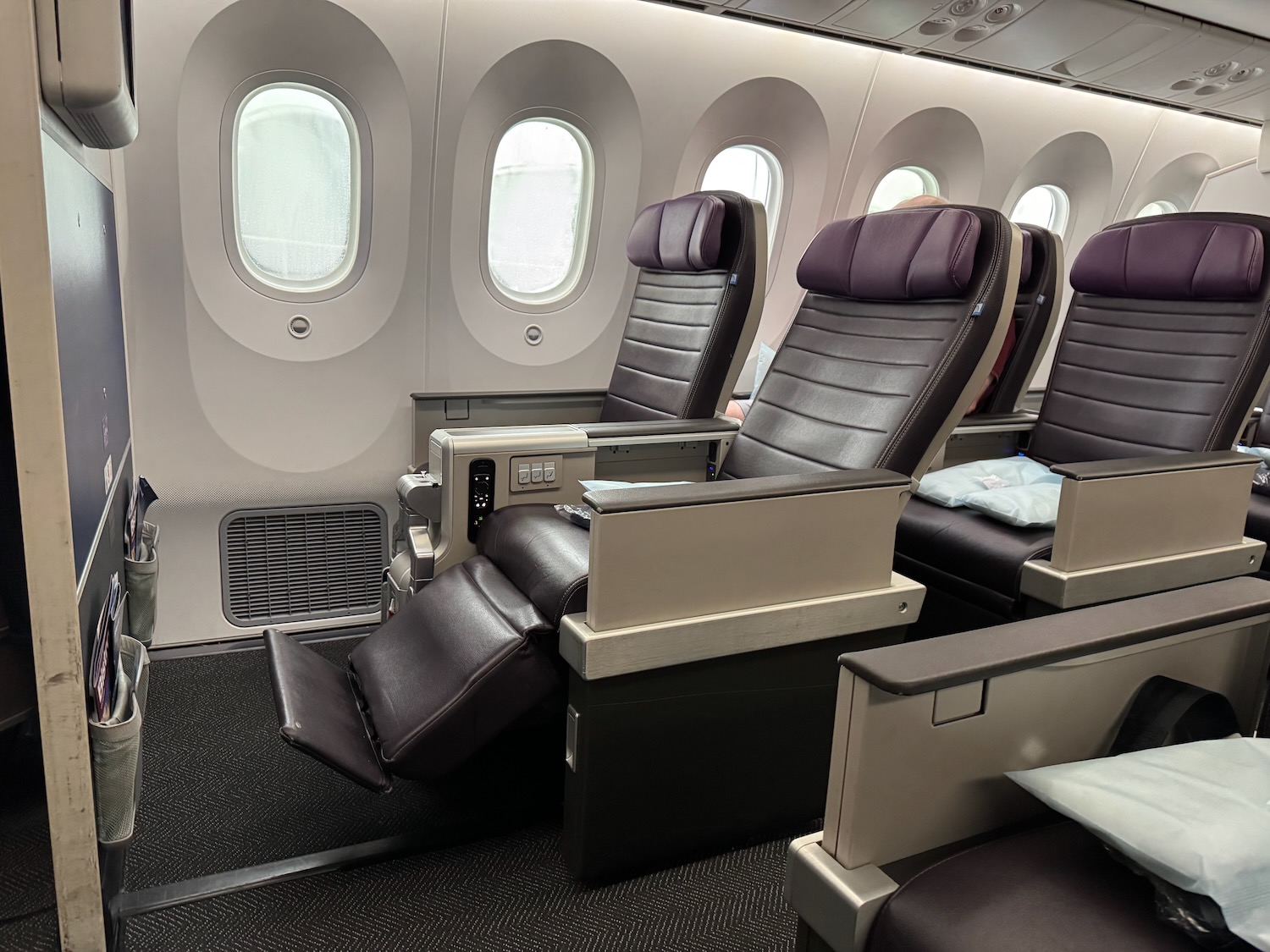
Airlines have fundamentally reshaped their revenue models. Delta, United, and American Airlines now prioritize premium economy over traditional coach, with Delta reporting that premium cabin fares generate more upfront revenue than standard economy seats.
The three major carriers continue expanding premium economy capacity across their fleets. This shift reflects a broader industry trend: the "back of the plane is shrinking" as carriers reduce coach configurations to make room for higher-margin seating tiers.
Premium economy occupies the sweet spot between economy and business class. It offers wider seats, extra legroom, better meals, and priority boarding at fares typically 50 to 100 percent above coach, yet substantially below business class prices. Airlines profit because passengers willingly pay the premium without the astronomical cost of first or business upgrades.
Delta's pivot toward premium revenue signals that the traditional three-tier model (coach, business, first) no longer drives profit. The airline discovered that enough customers value Premium Economy seating enough to fill those cabins consistently. United and American follow the same playbook, reconfiguring Boeing 777s, Airbus A350s, and narrowbody aircraft like the Boeing 737 MAX to allocate more premium economy rows.
This affects budget-conscious travelers directly. Fewer coach seats mean reduced availability and potentially higher economy fares as airlines squeeze lower-paying passengers into dwindling capacity. Savvy travelers who book early secure better coach pricing, but last-minute bookers face pressure to upgrade to premium economy.
For the business traveler and frequent flyer, premium economy represents a cost-effective alternative to business class on routes where first-class seats remain scarce. Airlines market these seats aggressively through loyalty programs, with frequent flyer miles stretching further in premium economy than business cabins.
The trend reveals passenger behavior: the middle market is growing. Fewer passengers accept basic economy discomfort,