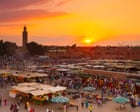
Marrakech's labyrinthine medina and relentless street theatre create an intoxicating draw that deepens with repeat visits. The Red City, Morocco's jewel set against the Atlas Mountains, reveals fresh secrets to travelers who venture beyond its famous plazas into winding souks and hidden corners.
The city anchors itself around Jemaa el-Fnaa square, where snake charmers, storytellers, and musicians perform daily theater. But the real magic lives in the medina's maze-like passages, where riads (traditional houses) tucked behind unmarked doors offer sanctuary. Marrakech's distinctive red clay buildings glow at sunrise and sunset, casting the entire city in warm amber light that justifies its ruby nickname.
Visitors approach Marrakech through multiple gateways. Hot air balloon rides over the surrounding desert and palm groves provide perspective on the city's dramatic positioning between the Atlas Mountains and olive-covered lowlands. Ground-level exploration demands patience and a willingness to get lost among spice vendors, metalworkers, and textile merchants whose ancestors traded these same routes centuries ago.
Accommodation ranges from budget riads offering rooftop terraces for $30-50 nightly to luxury properties like La Mamounia, an iconic palace hotel with gardens dating to the 1920s. Mid-range options pepper the medina and Gueliz (the new town), offering genuine character without extreme price tags.
Marrakech rewards repeat visitors in ways one-off trips cannot capture. A first visit maps Jemaa el-Fnaa and major monuments. A second allows deeper medina exploration. By a third or fourth stay, travelers develop relationships with shop owners, discover neighborhood hammams, and understand the city's rhythms beyond tourist hours.
The cost of living remains remarkably low for Western travelers. Street food