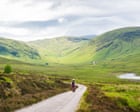
Travel writer Jack Thurston's new book captures the essence of Scotland's remotest cycling routes, documenting journeys through Sutherland's forgotten hill tracks and quiet byways. The expedition takes riders into Britain's wildest terrain, where solitude and history intersect on roads rarely traveled by cars.
Thurston and his companion Ben explored routes like those near Dun Dornaigil, a 2,000-year-old Iron Age broch perched beneath Ben Hope's dark cliffs. Starting from Lairg, the traditional "crossroads of the north," they pedaled through landscapes where breakfast can be cooked without encountering traffic. This type of cycling adventure reflects a growing trend among British cyclists seeking escape from busy roads and crowded trails.
Sutherland, in the Scottish Highlands, offers some of Britain's most isolated cycling territory. The region's sparse population and minimal through-traffic create conditions ideal for long-distance cycle touring. Riders discover ancient ruins, dramatic mountain scenery, and empty roads that feel genuinely remote. No major hotels anchor these routes, though locals and bothies provide basic accommodation options.
For cyclists planning similar expeditions, the Sutherland region demands self-sufficiency. Portable stoves, camping equipment, and route planning become essential. The best season runs from May through September, when weather is most stable and daylight stretches longest. Budget cyclists find the region exceptionally affordable, with minimal accommodation costs and negligible traffic hazards.
Thurston's exploration taps into the broader "gravel grind" and cycle touring renaissance, where travelers increasingly seek out unpaved routes and minor roads overlooked by mainstream tourism. Scotland's network of old military roads, estate tracks, and hill passes provides endless possibilities for discovery.
This cycling journey challenges the misconception that adventure touring requires dramatic mountaineering or extreme endurance. Instead, it celebrates