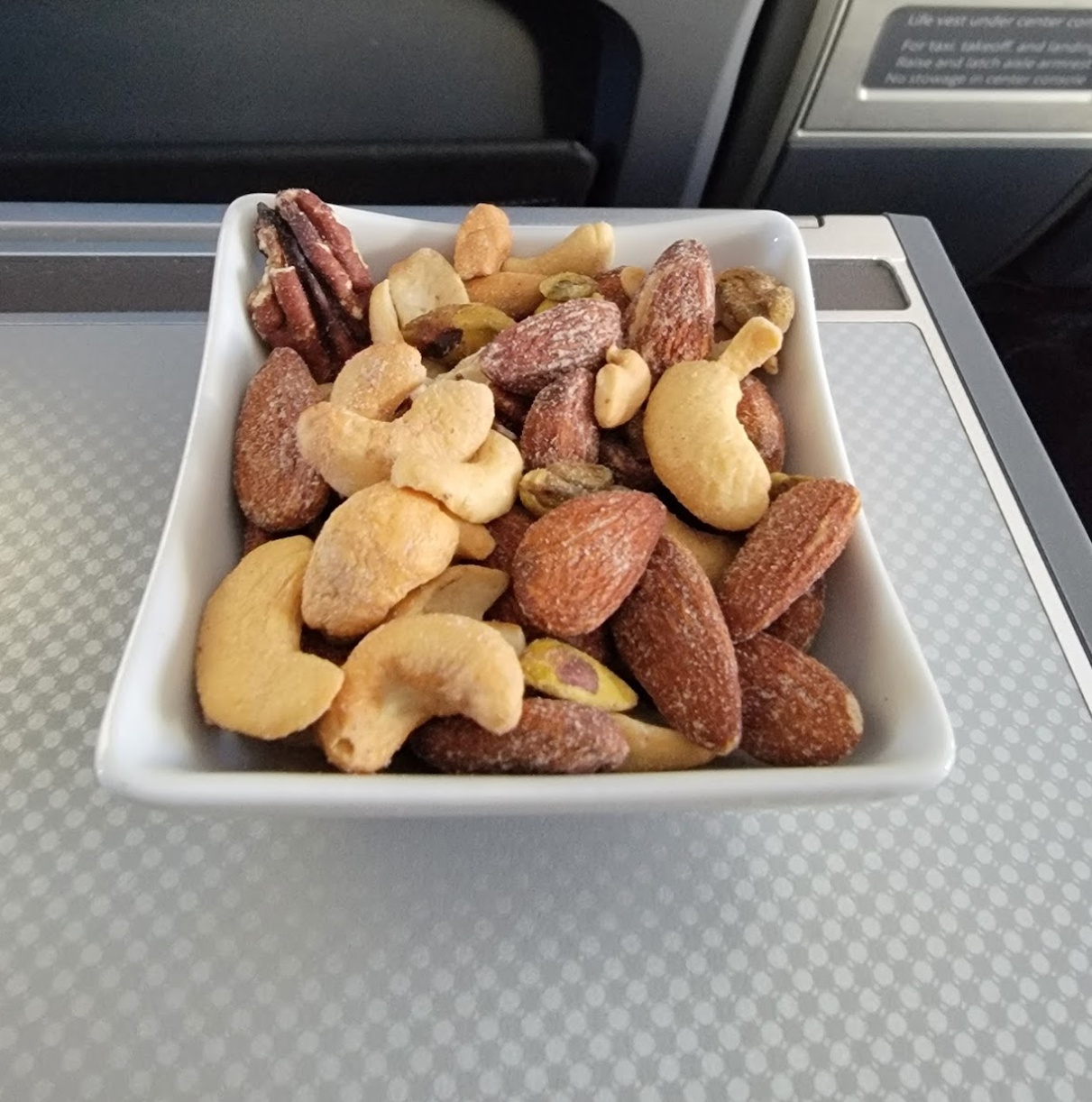
American Airlines, United, and Delta have leaned on warm mixed nuts as their signature first-class pre-meal service for decades, but the ritual has lost its luster. Passengers paying premium fares for transcontinental and international flights now expect more thoughtful hospitality than the same predictable warm ramekin they received in 2005.
The hot nuts tradition emerged in the 1980s as a marker of luxury air travel. Today, that distinction dissolves when every carrier serves nearly identical offerings. First-class cabins on these three major carriers charge anywhere from $500 to $2,500 for domestic upgrades and significantly more for long-haul routes, yet the complimentary snack remains unchanged.
Airlines miss an opportunity here. Premium passengers seek experiences that justify ticket prices. A rotating selection of elevated snacks, seasonal offerings, or even fresh pastries would differentiate the product without significant cost increases. Singapore Airlines serves gourmet canapés in business class. Lufthansa's first-class amenities include freshly prepared items tailored to regional preferences. These carriers understand that small touches compound passenger satisfaction and justify premium pricing.
The hot nuts gap reflects broader stagnation in first-class service. While seat design and entertainment systems have advanced, cabin service has stalled. Airlines invest heavily in new aircraft interiors but fail to refresh the basics that passengers experience multiple times per flight.
For business travelers flying weekly and leisure passengers saving for occasional splurges, first-class represents a significant investment. These customers notice when service reflects yesterday's standards. A premium cabin should feel like an upgrade, not habit.
The solution requires minimal effort. Airlines could partner with local chefs, introduce seasonal fruit and cheese selections, or serve fresh-baked items from onboard bakeries. Even simple changes like warm olives, marinated vegetables, or house-made snacks would signal that carriers value their