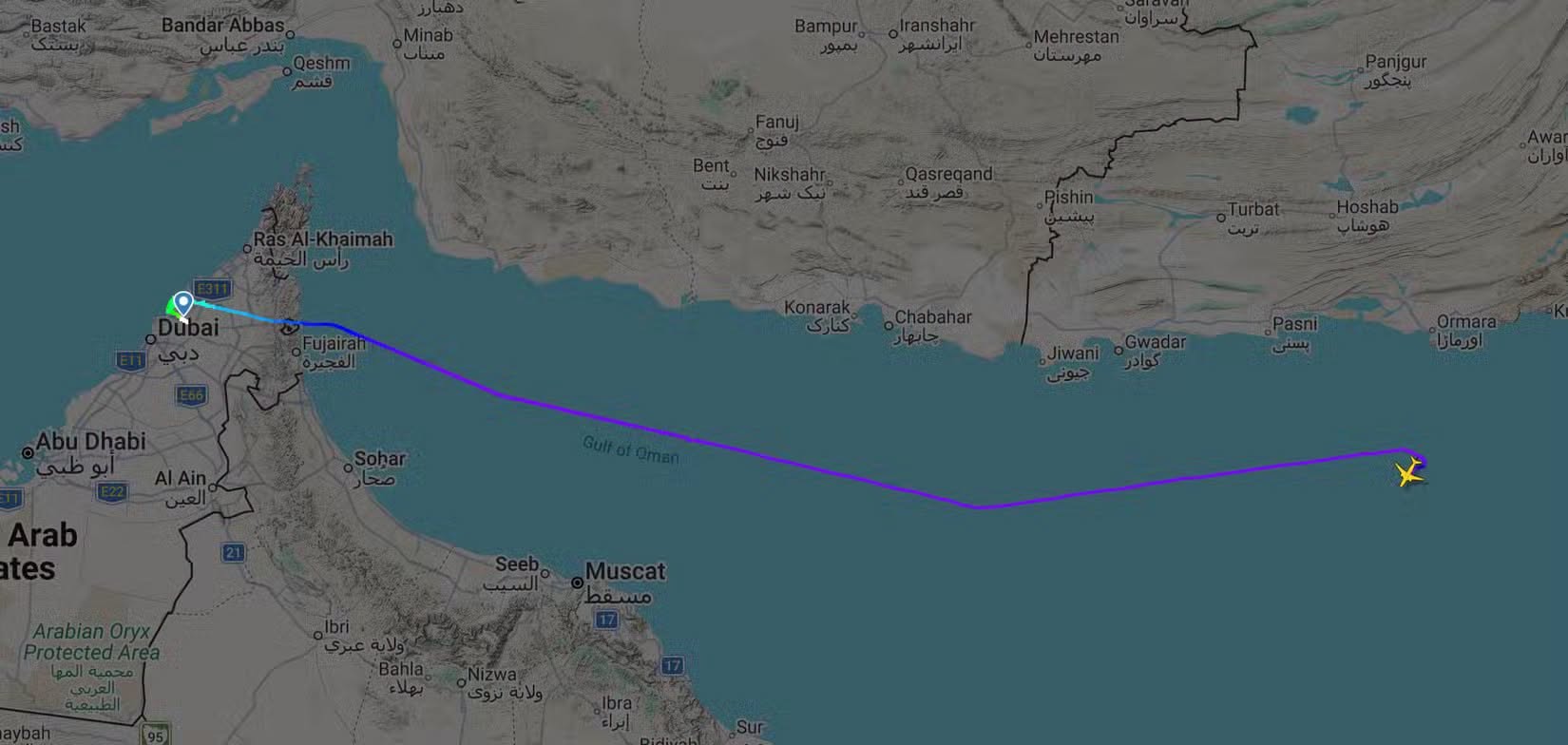
A K2 Airways Boeing 737-400 freighter carrying five crew members vanished over the Arabian Sea while operating a cargo flight from Sharjah, United Arab Emirates to Karachi, Pakistan. The aircraft reported navigation problems before experiencing rapid, violent altitude fluctuations that preceded the loss of radar contact.
The incident marks a serious blow to K2 Airways, a Pakistan-based cargo operator that depends on aging aircraft like the 737-400 to move freight across South Asian and Middle Eastern routes. The freighter variant of this Boeing model, first introduced in 1984, remains common in regional cargo operations despite its age, particularly among smaller carriers operating from secondary hubs like Sharjah's International Airport.
The Arabian Sea presents notoriously challenging flying conditions. The route between Sharjah and Karachi crosses volatile airspace prone to sudden weather systems and mechanical stress on aging aircraft. Navigation anomalies in this region can prove fatal if crews lack immediate alternatives or backup systems. The 737-400 freighter lacks modern redundancies found in newer cargo aircraft like the Boeing 777F or Airbus A330-200F.
This incident reignites scrutiny over Pakistan's aviation safety record. Pakistan International Airlines and smaller operators have faced repeated incidents over the past decade, leading to enhanced regulatory oversight from international aviation authorities. The crash of a Pakistan International Airlines ATR 42 in Havelian in 2020, which killed 98 people, prompted investigations into maintenance protocols and crew training standards.
For shippers relying on South Asian cargo corridors, the loss highlights operational risks with budget carriers operating vintage equipment. Major logistics providers increasingly favor larger operators like FedEx and DHL, which operate modern fleets with superior safety records. Regional carriers like K2 Airways fill the gap for price-sensitive shipments, but incidents like this one expose the trade-offs between