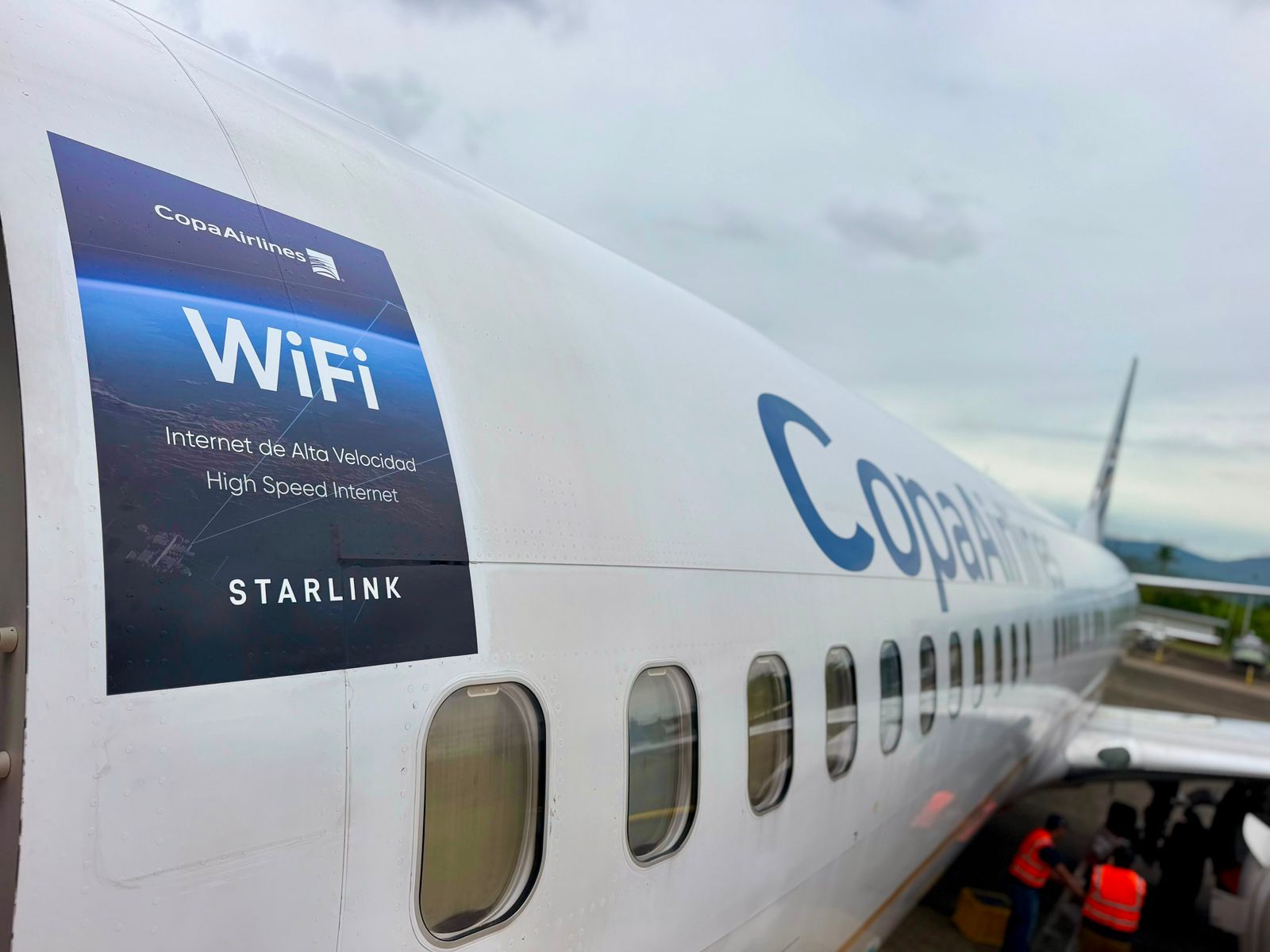
Copa Airlines' rollout of Starlink Wi-Fi signals a troubling shift in how airlines deliver inflight connectivity. The Panamanian carrier appears poised to charge most passengers for the service, breaking from the complimentary model that has defined Starlink's inflight debut at competitors.
This marks a departure from how other carriers have handled Starlink integration. Airlines including Delta, United, and American have offered free Starlink access as a premium perk, particularly for premium cabin passengers and frequent flyers. The service delivers speeds dramatically faster than legacy inflight Wi-Fi systems, with downloads reaching 50-100 Mbps. That performance advantage justified the no-cost approach for carriers seeking to differentiate their product.
Copa's paid model raises questions about Starlink's sustainability as a loss-leader for airlines. The constellation operator and aircraft operators face pressure to monetize connectivity. If smaller regional carriers like Copa begin charging, pressure mounts on larger U.S. carriers to follow suit. Premium cabin passengers accustomed to free access could face paywall friction.
The pricing structure Copa will implement remains unclear, though historical patterns suggest tiered offerings. Day passes typically run $7-8, while monthly subscriptions cost $50-70 on commercial airlines. Full-flight packages could cost $15-25 depending on carrier strategy.
For budget-conscious travelers, this development threatens one of the few genuine inflight perks still offered without fees. Airlines have systematically monetized cabin amenities over the past decade. Checked baggage fees, seat selection charges, and premium beverage pricing became industry standard. Free Wi-Fi represented rare exceptions.
The implications extend beyond Copa passengers. If the carrier succeeds with paid Starlink access, competitors operating tight margins may adopt similar strategies. This would fundamentally reshape passenger expectations around inflight connectivity. What began as an exciting competitive advantage risks becoming yet another