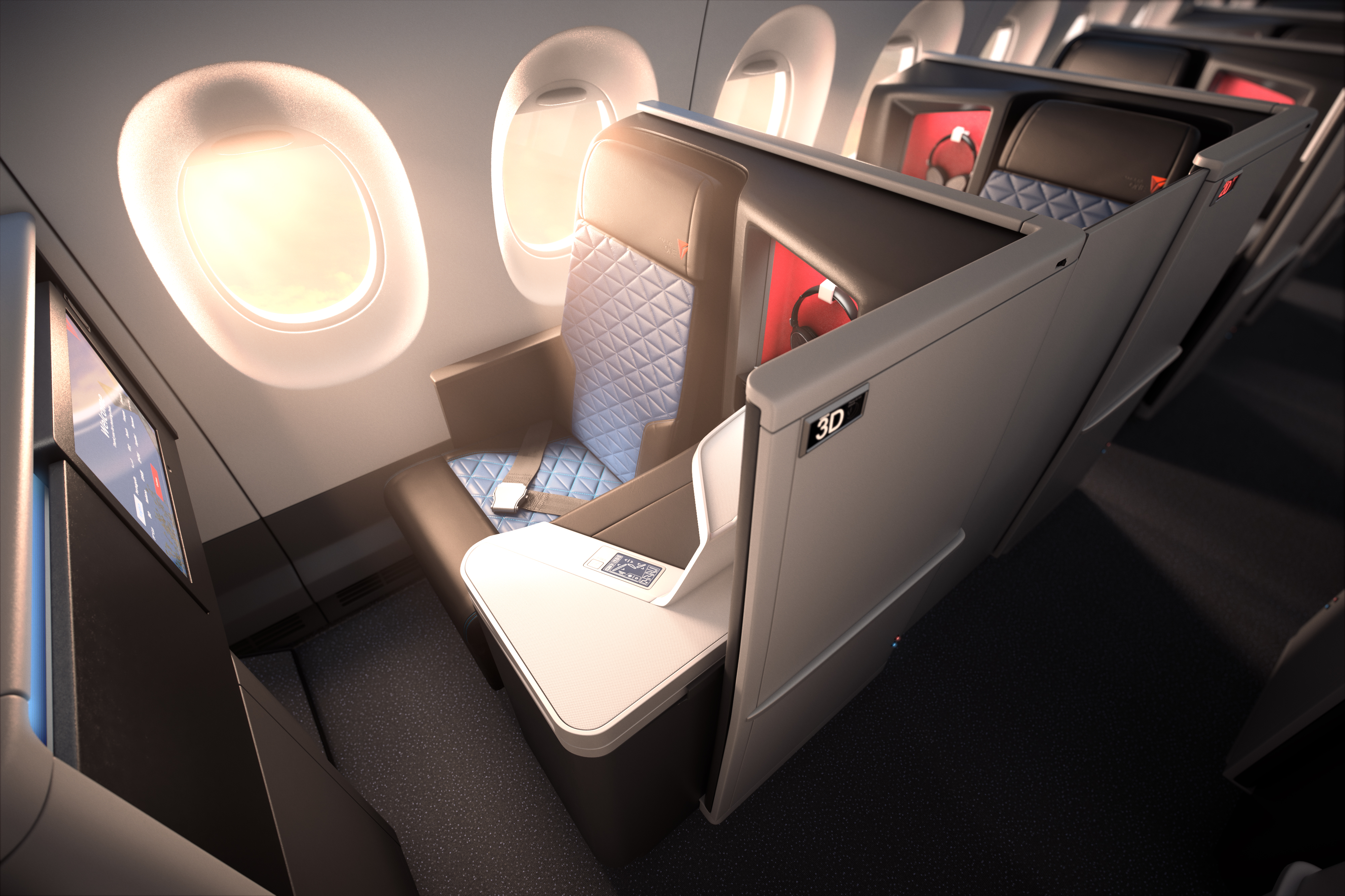
Delta Air Lines has introduced a tiered premium cabin strategy that strips benefits from business and first class while maintaining high fares. The new Basic Business, Basic First, and Basic Premium Economy classes eliminate lounge access, advance seat assignments, booking flexibility, checked baggage allowances, and elite frequent flyer mileage earning.
The move represents a fundamental shift in how Delta monetizes premium cabins. Passengers paying business class fares no longer receive the perks traditionally bundled with those tickets. They board in premium cabins but sacrifice the amenities that justified premium pricing for decades. Lounge access disappears entirely. Seat selection becomes unavailable until check-in. Changes to flights incur fees. Bag fees apply despite premium pricing. SkyMiles earning rates drop below traditional business class rates.
Delta maintains near-identical fares between Basic Business and standard Business Class, negating any savings for passengers accepting fewer perks. The same pricing structure applies across Premium Economy and First Class tiers. This strategy forces premium cabin passengers into an uncomfortable choice: pay the same amount for fewer benefits or upgrade to higher tiers for baseline amenities.
The carrier follows industry precedent set by legacy airlines experimenting with cabin stratification. United and American Airlines employ similar models, though Delta's implementation appears more aggressive in eliminating traditionally guaranteed benefits. Budget carriers like Spirit and Frontier built their models on stripping amenities, but legacy carriers traditionally distinguished premium cabins through bundled benefits.
Travel experts view this development skeptically. Business travelers booking through corporate programs may see limited choice, but leisure premium cabin passengers hold leverage. Airlines competing for premium cabin revenue face pressure to maintain differentiation. Delta's approach risks pushing price-sensitive premium customers toward competitors offering clearer value propositions.
The timing reflects post-pandemic revenue pressures. Airlines maximize ancillary revenue by unbundling services previously included in ticket prices. However, premium cabin passengers expect