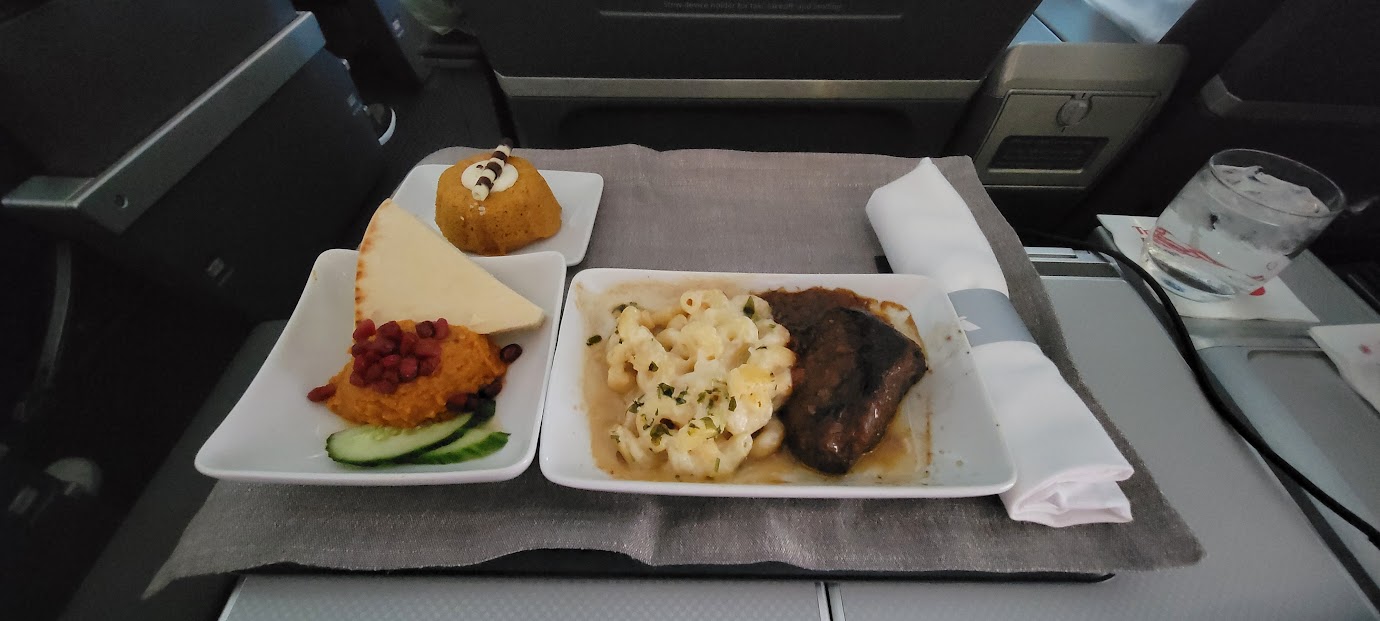
American Airlines operates under a strict policy for first class meal service on domestic routes. The airline only provides meals on flights exceeding 900 miles. Yet one route breaks this rule entirely: Chicago to Denver.
American continues to serve meals on the Chicago-Denver route despite the flight covering roughly 850 miles, well under the carrier's stated threshold. The explanation reveals a quirk in American's system architecture. The airline still calculates distances using Denver's old Stapleton International Airport, which closed in 1995. Denver International Airport, which opened that same year, sits about 25 miles northeast of the city, pushing the theoretical distance over 900 miles on American's legacy measurements.
This outdated data persists in American's routing systems nearly three decades after Stapleton's closure. The discrepancy means Chicago-Denver passengers enjoy hot meals in first class, a perk normally reserved for longer journeys. Passengers on comparable-length routes, such as Dallas to Denver or Los Angeles to Denver, receive no meal service despite comparable flight times and distances.
American's inflexible meal policy has drawn criticism from frequent flyers who point out similar domestic routes under 900 miles receive no complimentary food service. The Chicago-Denver exception undercuts the airline's insistence that it maintains no special markets for meal service. The technical error also highlights how legacy data can persist in large corporate systems, creating unintended beneficiaries while disadvantaging passengers on other routes.
Travelers booking first class on American should verify meal eligibility before flying, though the Chicago-Denver route appears secure in its grandfathered status. The airline shows no indication of updating its distance calculations or extending meal service to other short-haul first class routes. This oddity demonstrates how outdated information in airline systems can create lasting inconsistencies in passenger service.