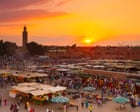
Marrakech rewards repeat visitors with layers of discovery that reveal themselves slowly across multiple trips. The Red City, nestled against the snow-capped Atlas Mountains, offers far more than initial impressions suggest.
The medina operates as a living organism. Street performers, spice merchants, and craftspeople transform narrow alleyways into theaters of daily commerce. Getting lost becomes the point. Winding passages lead to hidden riads, traditional houses built around courtyards, each one a portal to Moroccan domestic life. The sensory overload of leather tanneries, mint tea stalls, and textile vendors never dulls.
Marrakech's position at the edge of the Atlas Mountains and the Sahara creates distinct experiences depending on where travelers venture. Hot air balloon rides departing early morning reveal the geography that shaped the city's history. Camel trade routes once connected this desert crossroads to sub-Saharan salt markets. That commercial heritage persists in the Jemaa el-Fnaa square, where snake charmers, musicians, and storytellers perform for crowds exactly as they have for centuries.
The Red City earned its nickname from the distinctive clay and sandstone buildings that glow russet in late afternoon light. This architectural consistency, enforced by local building codes, maintains visual harmony throughout neighborhoods. Traditional kasbahs, Islamic gardens, and the Koutoubia Mosque anchor the city's spiritual and aesthetic core.
For travelers planning visits, multiple trips unlock Marrakech's real appeal. First-time visitors focus on major sites. Return trips burrow deeper into neighborhood restaurants, obscure souks, and relationships with local guides who know which palaces open their doors selectively. The city's rhythm shifts seasonally. Winter brings European tourists fleeing northern weather. Summer heat empties streets at midday, allowing quieter exploration.
Budget ranges vary dramatically. Budget travelers