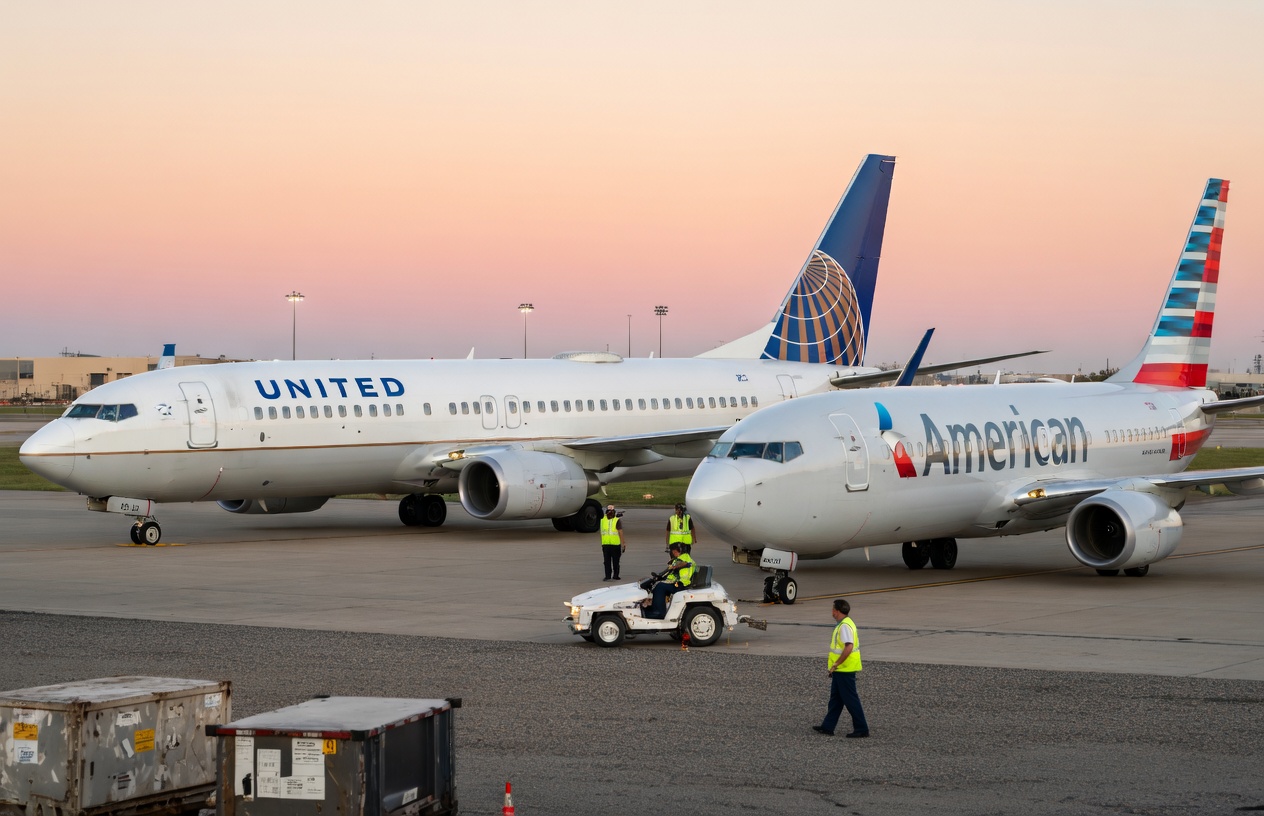
Three major U.S. carriers charged exactly $523 for Chicago to Denver flights, sparking fresh accusations of collusion. American Airlines, United Airlines, and Southwest Airlines all offered identical pricing on the same route, reigniting debate about whether the airline industry engages in illegal price-fixing.
Identical fares between competitors happen roughly 50 percent of the time, according to industry data. This frequency stems from two legal mechanisms that enable rapid price matching without requiring explicit coordination between airlines.
ATPCO, the Airline Tariff Publishing Company, serves as a central repository where carriers file their fares. This system allows competitors to monitor pricing almost instantaneously and adjust their own rates accordingly. Airlines can legally track rival prices through ATPCO and match them within minutes, creating the appearance of coordination without violating antitrust law.
The practice walks a thin line. While legal price matching through publicly available fare data is permitted, airlines have historically attempted to cross into illegal territory. Previous investigations revealed carriers using private meetings and direct communication to coordinate prices, violations that resulted in fines and settlements.
The $523 Chicago-Denver fare exemplifies how modern airline pricing operates in a gray zone. Travelers often see identical prices across multiple carriers because of legitimate competitive monitoring, not necessarily because of backroom deals. However, the near-total uniformity of pricing in the industry continues to raise questions about whether competition genuinely drives fares down.
For travelers booking flights, these patterns matter. The consistency of prices across carriers suggests limited opportunity to find meaningful savings through shopping alone. Booking timing, day of week, and advance purchase periods often prove more effective strategies than comparing airlines on identical routes.
The airline industry faces ongoing scrutiny from regulators and consumer advocates who question whether current pricing mechanisms adequately protect competition. ATPCO's role as the industry's pricing backbone remains controversial, though the system itself operates legally under current