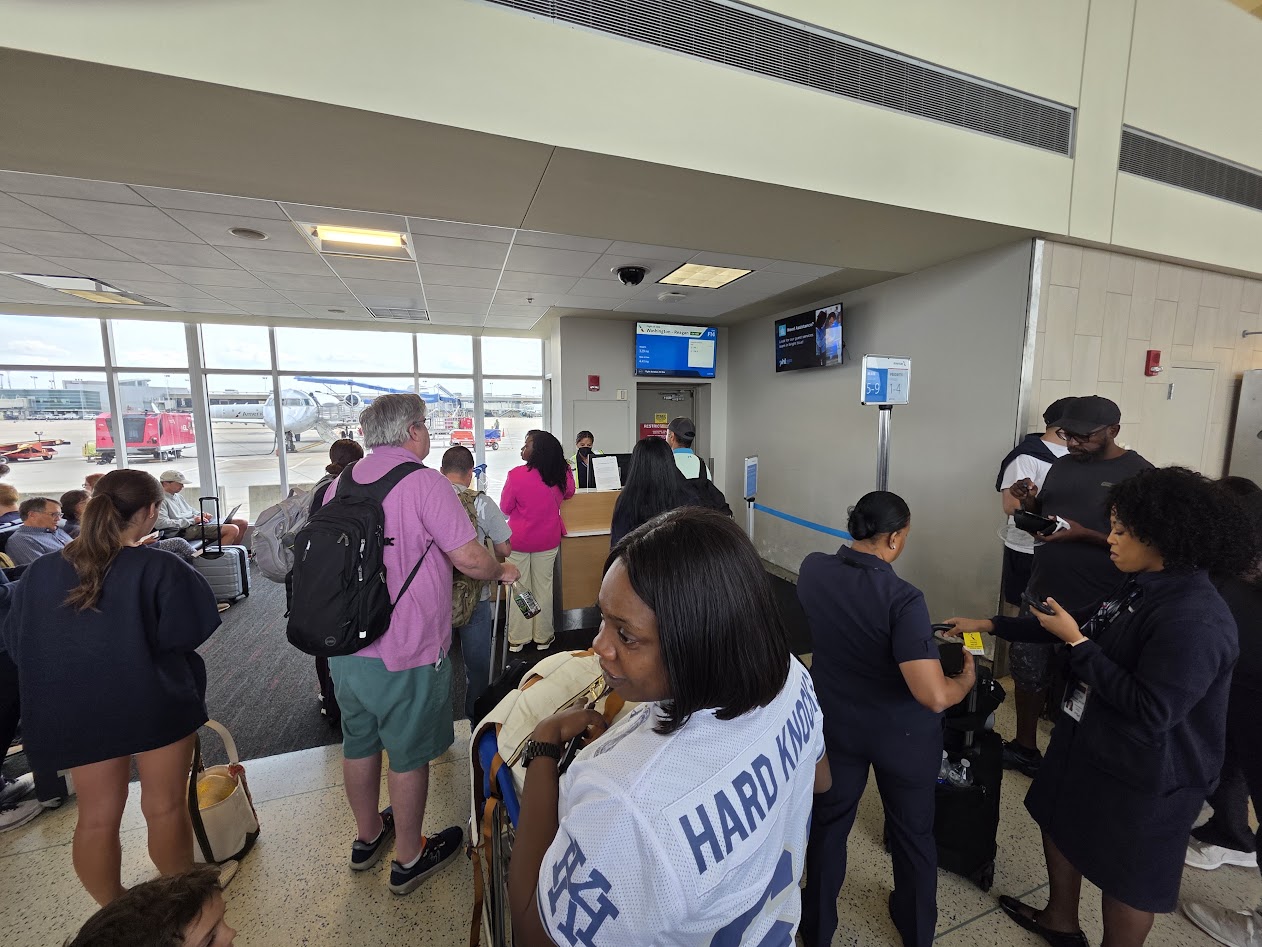
American Airlines escalated its overselling strategy dramatically, offering passengers $1,125 to voluntarily give up seats on a Philadelphia-to-Washington flight. The initial offer represented a sharp increase from typical airline compensation, signaling aggressive demand management as carriers manage post-pandemic capacity challenges.
The journalist traveling on American Airlines oneworld sapphire status accessed the carrier's Flagship Lounge at Philadelphia International Airport's Terminal A West, where business-class amenities included premium beverages and local Philly cheesesteaks. The high volunteer compensation offer emerged at the gate, suggesting the flight had been significantly overbooked.
This compensation level reflects broader industry trends. Airlines routinely overbook flights expecting no-shows, but when demand exceeds capacity, they must entice passengers to accept involuntary bumps. Standard Department of Transportation regulations cap involuntary denial-of-boarding compensation at $750 domestically. American's $1,125 offer exceeded federal minimums, indicating the airline prioritized maintaining customer relations over minimum compliance.
The incident underscores recurring friction in modern air travel. While American maintains premium lounge experiences for elite frequent flyers, operational challenges like overbooking and gate management persist. The Philadelphia airport experience captured this contradiction. Despite access to business-class lounges, passengers faced service reductions across the broader terminal experience, with buses servicing gates in less-developed concourses rather than jetways.
For travelers booking American Airlines, this data point suggests three things. First, overselling remains standard practice despite post-pandemic demand volatility. Second, carriers now offer substantial voluntary compensation when flights oversell significantly, giving flexible passengers potential windfalls. Third, elite status remains valuable for lounge access and seat priority, but doesn't shield passengers from operational challenges affecting the broader airport experience.
The $1,125 offer represents American's calculation that retaining customer goodwill costs less than