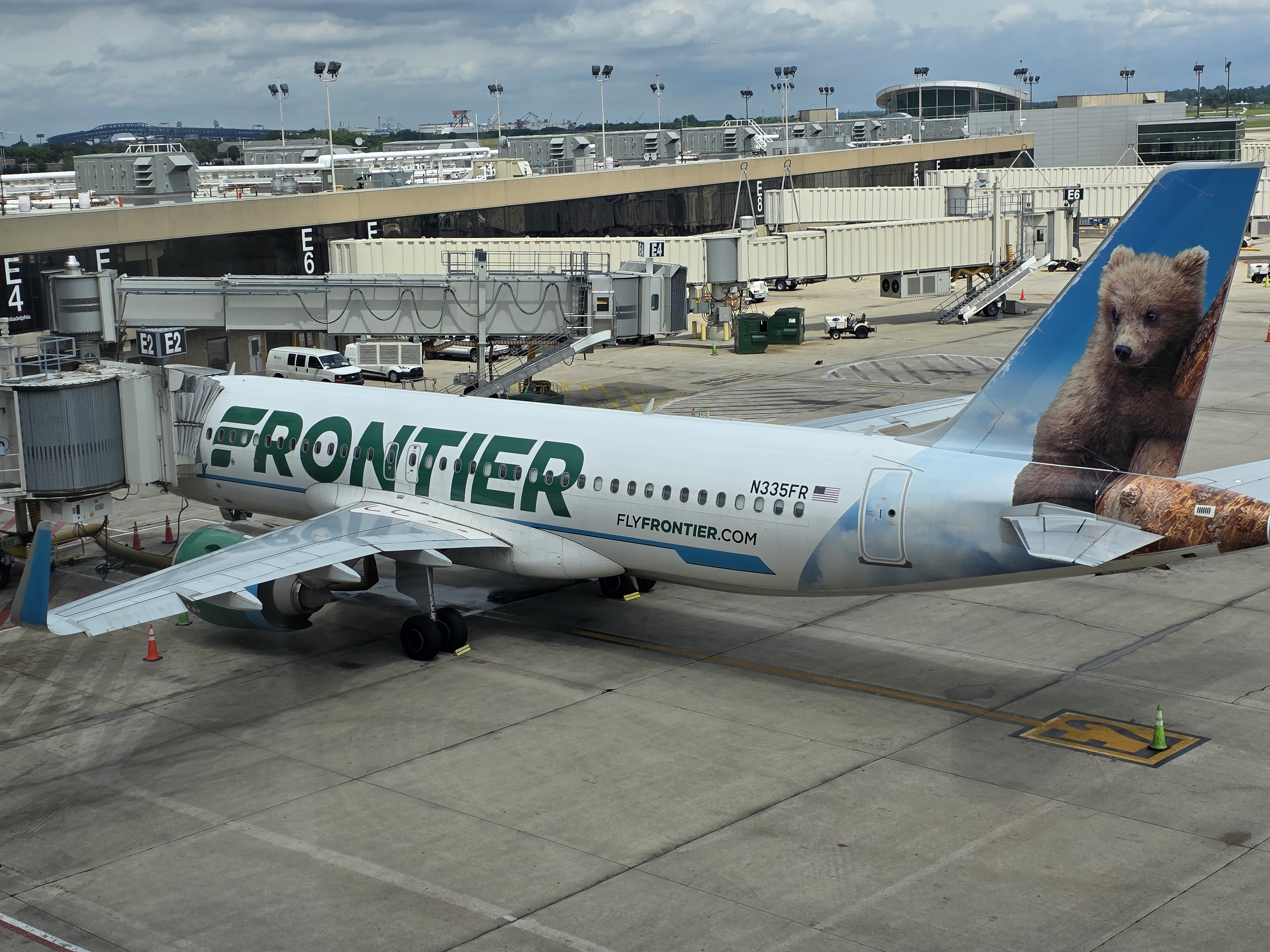
Frontier Airlines plans to install Starlink Wi-Fi across its entire fleet starting next year, a move that will fundamentally reshape the low-cost carrier's competitive position in customer experience. The ultra-fast satellite internet service will provide gate-to-gate connectivity on all Frontier aircraft, positioning the airline years ahead of major competitors like Delta Air Lines.
Delta won't begin rolling out Amazon's Kuiper satellite internet until 2028, and the Atlanta-based carrier initially plans to equip only half its fleet. This timeline gives Frontier a substantial first-mover advantage in offering premium connectivity to budget-conscious travelers who have historically accepted spotty or nonexistent Wi-Fi as the trade-off for cheaper fares.
Frontier's transformation from an airline offering zero Wi-Fi to one boasting industry-leading connectivity represents a significant shift in ultra-low-cost carrier strategy. The airline has gradually enhanced its amenities to compete more directly with legacy carriers while maintaining lower ticket prices. Passengers flying Frontier on routes like Denver to Las Vegas or Chicago to Fort Lauderdale will soon enjoy speeds comparable to what they get at home or in the office.
The timing matters enormously for business travelers and frequent flyers who increasingly demand reliable connectivity for work. Frontier's pricing remains competitive with American, United, and Southwest while offering better Wi-Fi than Delta will provide for several more years. This positions Frontier to capture market share among remote workers and business passengers who previously chose full-service carriers despite higher costs.
Starlink's reliability has improved substantially over the past year, making it a viable option for commercial aviation. The system requires minimal ground infrastructure, allowing Frontier to retrofit aircraft quickly without extensive airport coordination delays that traditional Wi-Fi installations demand.
For travelers planning trips in 2025 and beyond, Frontier offers an increasingly attractive option that doesn't require sacrificing connectivity for savings. The shift reflects