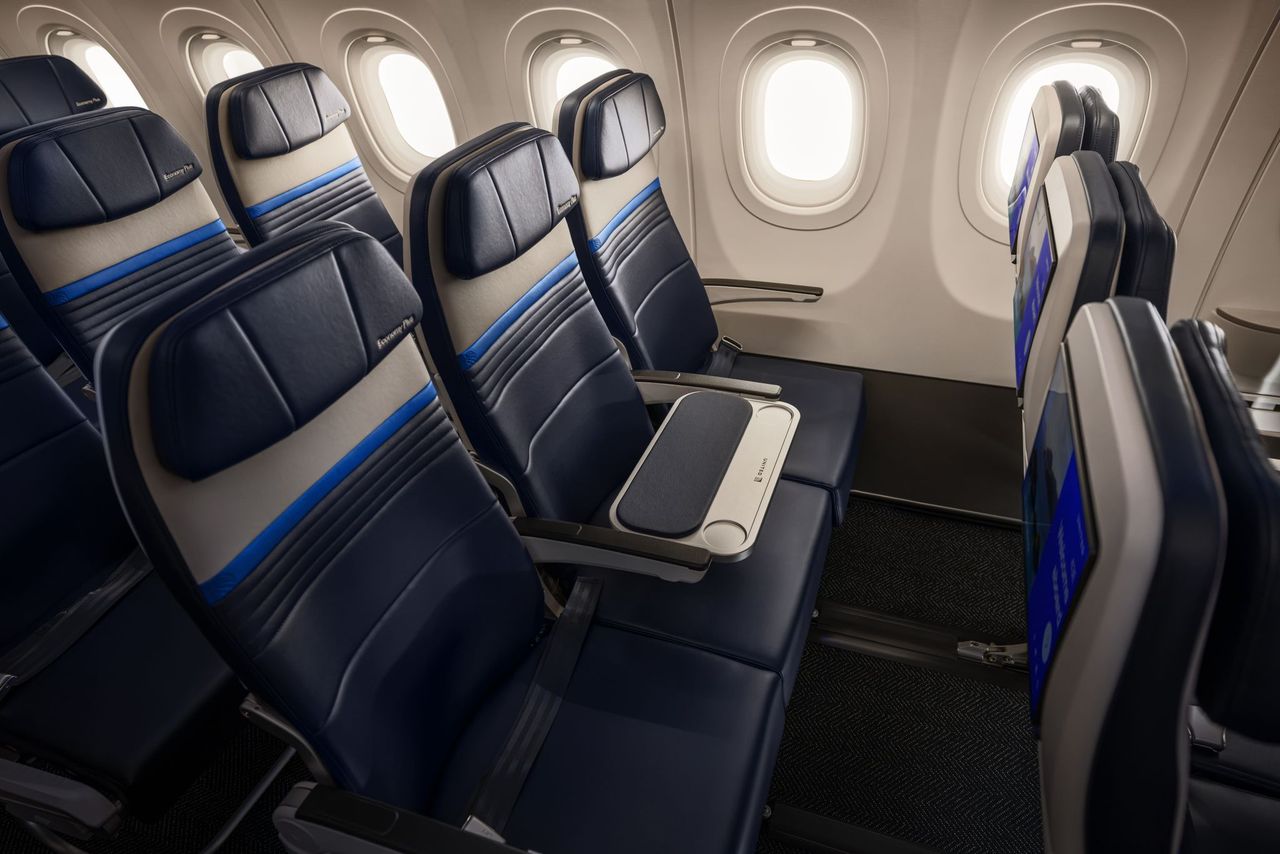
United Airlines blocks middle seats on its new Airbus A321XLR aircraft starting later this year on domestic routes, with international service launching in 2027. The carrier will designate these blocked seats as Economy Plus offerings, giving passengers more personal space without forcing them into premium cabin purchases.
This move signals a shift in how legacy carriers handle cabin density on new aircraft. The A321XLR, Airbus's extended-range narrowbody jet, seats roughly 244 passengers in a typical two-cabin configuration. By blocking middle seats in economy, United reduces that count but improves the passenger experience on a plane designed for long-haul routes up to 4,700 nautical miles.
The strategy reflects broader airline industry trends. Competitors including Delta Air Lines and Southwest Airlines have experimented with seat-blocking or reduced density configurations to differentiate their products. United's approach avoids creating another branded fare class while still capturing premium pricing from passengers unwilling to sit in blocked middle seats.
For travelers, this creates a middle ground. Economy passengers get standard legroom but more shoulder room without paying for United's higher-tier Economy Plus fares, which typically cost $50 to $150 per flight segment depending on route length. Business class and first class remain separate premium offerings.
The A321XLR's domestic deployment addresses a key pain point on cross-country and transcontinental routes where narrowbody jets dominate. United's 787 Dreamliners and 777 aircraft handle premium long-haul traffic to Europe and Asia, but the A321XLR fills a gap on high-demand domestic routes and regional international flights to Mexico and the Caribbean.
Airlines face pressure to improve cabin comfort as economy passengers grow increasingly frustrated with shrinking space and rising fares. United's blocked-seat strategy proves less drastic than Southwest's open seating or frontier-style ultra-low