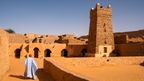
Mauritania remains one of the world's most inaccessible travel destinations, yet it offers travellers willing to venture into the Sahara an extraordinary landscape of ancient cities and hidden oases. The West African nation sees fewer international visitors annually than many single European landmarks.
The country's appeal lies in its historical depth. Chinguetti and Ouadane, centuries-old trading post cities, sit preserved in the desert with narrow mud-brick streets and Islamic libraries containing centuries-old manuscripts. These settlements once anchored trans-Saharan caravan routes that connected sub-Saharan Africa to North Africa and beyond. Today, they feel frozen in time, accessible primarily through specialist tour operators and overland travel companies that organize multi-day expeditions.
Getting to Mauritania requires patience. Flights arrive primarily through Nouakchott, the capital, via connections through Casablanca, Dakar, or Paris. Visas present another hurdle. Security concerns keep many international airlines away, and infrastructure remains basic outside major towns.
The Sahara itself dominates the experience. Travellers encounter massive dune fields, ancient caravan routes, and nomadic Bedouin communities. Atar serves as a gateway to desert exploration, with organized tours accessing the Adrar Plateau region. Accommodation ranges from basic guesthouses to desert camps offering camel treks and overnight stays under stars.
Costs remain remarkably low compared to neighbouring Senegal or Mali. Budget travellers spend 30-50 USD daily on accommodation and food. Organized desert tours through operators cost 150-300 USD per day, making Mauritania cheaper than most North African alternatives.
The tourism infrastructure deliberately remains minimal, which protects the destinations' authenticity. Travellers encounter few other visitors and minimal commercialization. This isolation appeals to adventurous explorers seeking genuine desert