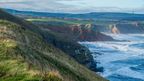
Scotland has opened the Deep Time trail, a coastal walking route that reveals 1.3 billion years of geological history. This trail stretches across Assynt in northwest Scotland, connecting key sites where scientists first understood how the Earth's crust forms and transforms.
The 30-kilometer path passes through dramatic landscapes shaped by ancient continental collisions. Walkers encounter Torridonian sandstone cliffs, Cambrian quartzite peaks, and evidence of the Moine Thrust, a geological fault that fundamentally changed how geologists interpret planetary structure. These rocks tell the story of supercontinents colliding, mountain ranges rising, and ancient seabeds thrust upward.
Geologist James Hutton revolutionized science at sites along this coast in the 1780s. His observations here led to the modern understanding of geological time and the principle of uniformitarianism. Walkers now follow in the footsteps of these discoveries at locations like Knockan Crag, where the thrust fault is strikingly visible in the landscape.
The trail accommodates different fitness levels. Shorter loops allow casual visitors to explore specific sections around villages like Lochinver and Ullapool. Full-day walks offer more ambitious hikers complete geological immersion. The route guides travelers through moorland, past sea lochs, and along windswept cliffsides with Atlantic Ocean views.
Local operators provide guided walks that combine geology with natural history and Highlands culture. Accommodation ranges from budget hostels in Ullapool to mid-range hotels like the Cuag Guest House in Lochinver. Several small operators run geology-focused tours, making the science accessible without technical expertise.
The Deep Time trail marks a shift toward geotourism in Scotland. As travelers seek meaningful destinations beyond typical city breaks, geological sites attract visitors interested in Earth science, landscape photography, and outdoor education