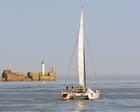
SailLink's new wind-powered catamaran service from Dover to Boulogne transforms the cross-Channel journey into an experience rather than mere transport. Operating up to five times weekly from April through mid-September, the service uses engines only when necessary, relying primarily on sail power to reduce carbon emissions while creating what helmsman Chris O'Brien describes as a "meditative" crossing.
The route opens direct access to France's Côte d'Opale and the Pas-de-Calais region, where travellers can explore by bicycle, boat, and kayak. The Saint-Omer marshes offer particularly scenic paddling opportunities for kayakers seeking quieter waterways beyond traditional tourist paths.
This development reflects growing traveller demand for sustainable transport options and experiential ferry crossings. Rather than the rushed, utilitarian feeling of conventional ferries packed with vehicles, SailLink positions sailing as part of the holiday itself. The service fills a niche between budget ferry operators and luxury cruise lines, appealing to environmentally conscious travellers and adventure seekers.
The timing matters. Traditional Dover to Calais routes via P&O Ferries, DFDS, and Stena Line remain cheaper for basic vehicle transport, but SailLink attracts passengers prioritizing reduced environmental impact and the romance of sail travel. The new Shoreham to Fécamp route expands options for southern England travellers avoiding the crowded Dover corridor entirely.
For trip planning, the seasonal schedule requires advance booking. The April to mid-September window captures prime cycling weather across northern France, though accommodation in Boulogne and Saint-Omer books quickly during summer months. The catamaran format limits passenger capacity compared to conventional ferries, making early reservations essential for bank holidays.
SailLink's model signals shifting priorities among European travellers who increasingly view journeys as integral to their