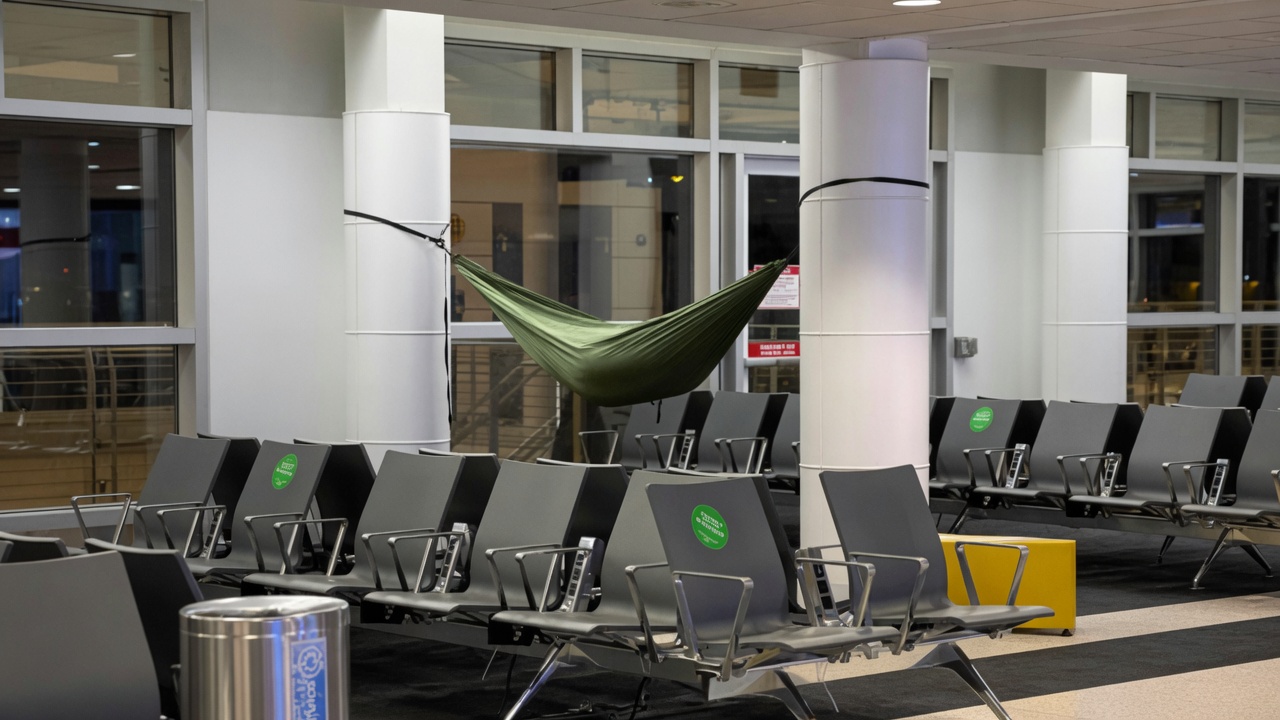
The Transportation Security Administration cleared hammocks for airport travel, but the fine print matters. TSA allows passengers to pack hammocks in both carry-on and checked baggage through security checkpoints. However, actually using that hammock at the airport presents real complications.
Individual airport policies vary significantly. Many major U.S. airports prohibit sleeping arrangements in terminals, treating hammocks as prohibited installations. Others allow them only in designated rest areas or lounges. Some airports simply lack suitable anchor points or view hammocks as obstruction hazards in busy terminals.
Travelers planning to nap during layovers should check their specific airport's regulations before arriving. Hartsfield-Jackson Atlanta International, Chicago O'Hare, and Los Angeles International do not permit hammock setup in public areas. Dallas/Fort Worth International and Denver International offer limited rest facilities but generally discourage DIY sleeping solutions.
The hammock rules reflect broader airport policies around passenger behavior. Airports balance passenger comfort with terminal flow and safety requirements. A hammock strung between columns could block wayfinding, create tripping hazards, or violate building codes. Rest-deprived travelers find alternatives instead, including airport hotels, lounges with recliners, and sleeping pods offered at select hubs.
TSA's position focuses solely on security screening, not airport operations. The agency doesn't regulate terminal behavior or installation policies. That authority rests with individual airport operators and their leasing agreements.
Budget travelers eyeing hammocks for extended layovers should pack them anyway, but arrive with backup plans. Airport lounges accessible through Priority Pass memberships or airline status offer proper rest facilities. Many U.S. airports now offer nap pods or sleep lounges through operators like GoSleep and Minute Suites, costing fifteen to forty dollars per hour.
The hammock permitting situation highlights the gap between what security allows and what airports permit