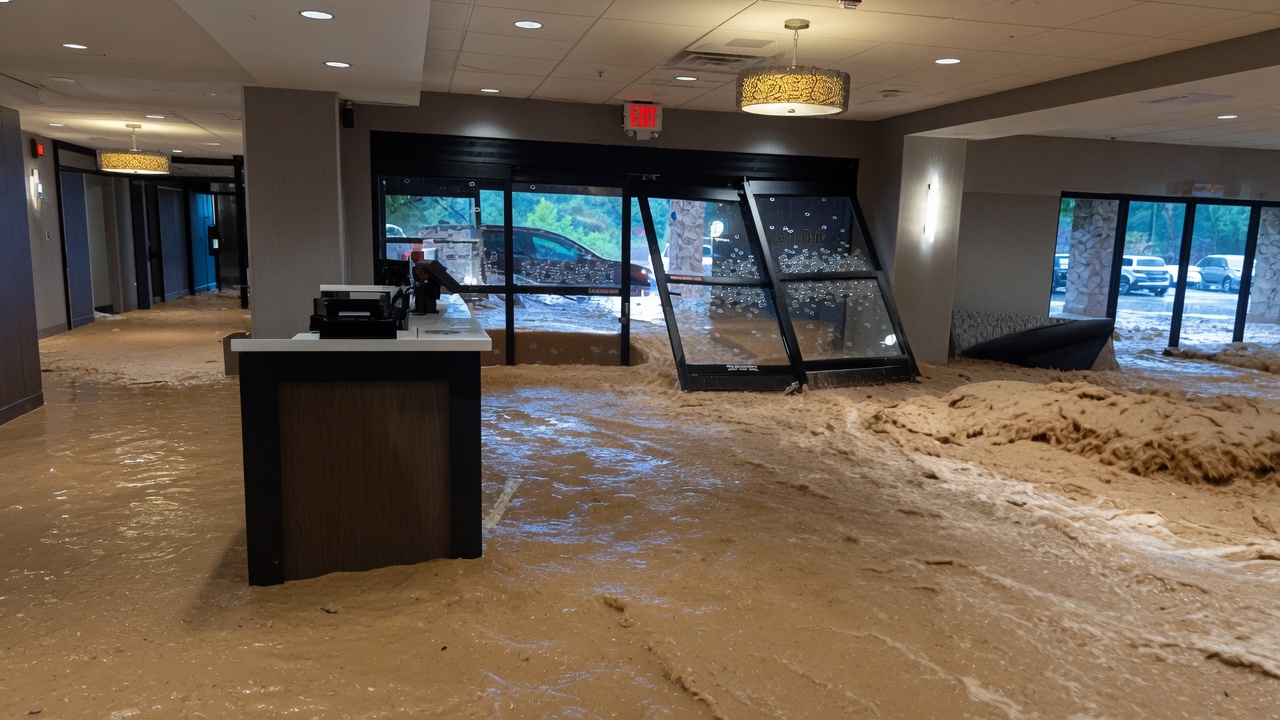
An emergency room nurse checking into a Hampton Inn in West Virginia encountered catastrophic flooding that submerged the hotel lobby in thigh-high water and swept guest vehicles across the parking lot. The incident highlights the increasing vulnerability of budget hotel infrastructure to extreme weather events.
The traveler, en route to work his ER shift, discovered the lobby completely flooded upon arrival. His vehicle was among multiple cars displaced by the surging floodwater that inundated the property's parking area. The Hampton Inn, part of Hilton's economy lodging chain with properties across North America, suffered severe infrastructure damage from what appears to have been a flash flood event.
This incident reflects a troubling pattern affecting budget hotel chains nationwide. Hampton Inn properties, which typically charge $80-150 per night, often occupy locations chosen for accessibility and affordability rather than optimal topography or flood resilience. The brand operates over 2,400 locations globally, with many positioned in areas prone to seasonal flooding or severe weather exposure.
For business travelers like this nurse, such disasters disrupt essential travel plans and expose the risks of budget accommodations during severe weather. Most travel insurance policies exclude flood damage to personal vehicles in parking lots, leaving guests with personal liability for repairs. The incident also raises questions about property-level safety protocols and whether Hampton Inn properties receive adequate maintenance budgets for drainage systems and emergency preparedness.
Hotels nationwide face increasing insurance costs and weather-related closures. The American Hotel and Lodging Association reports that weather events cause millions in annual losses across the sector. Budget chains absorb these costs more visibly than luxury operators, sometimes resulting in deferred maintenance on critical systems.
This West Virginia flooding event serves as a reminder for business travelers to research property locations before booking, particularly during storm seasons. Checking local flood maps and recent weather history for specific addresses helps minimize exposure to water damage risks. For those with flexible schedules, selecting properties on