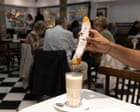
Valencia's legendary horchaterías preserve one of Spain's most cherished traditions. Horchata de chufa, a creamy drink made from tiger nuts, remains the heart of Valencian café culture, served in grand parlours alongside sugar-glazed pastries called fartons.
The drink's appeal transcends age and routine. One local couple described it simply: "As long as we have at least one every day." This casual devotion reflects horchata's deep roots in Valencia's identity, where the beverage earned its nickname as "white gold."
Tiger nuts, or chufas, grow abundantly in Valencia's fertile soil. The nuts transform into a milky, subtly sweet liquid that locals consume year-round, though traditionally it dominated summer menus. Modern horchaterías blur seasonal lines, serving the drink consistently while maintaining historic recipes passed down through generations.
The horchatería experience differs sharply from typical coffee shops. These spaces function as social anchors, where patrons linger over small glasses of horchata and conversation. The ritual involves sipping slowly, often in pairs or groups, creating moments of connection that define Valencia's leisurely approach to eating and drinking.
Finding the perfect horchatería requires wandering beyond tourist zones. Established establishments maintain their vintage aesthetics, with ceramic tiles, wooden counters, and walls decorated with photographs spanning decades. These details signal authenticity and longevity in a city where horchata culture remains living tradition rather than tourist attraction.
Visitors planning trips to Valencia should prioritize horchaterías as cultural experiences, not merely refreshment stops. Arrive mid-morning or late afternoon when locals gather, order a small glass, and pair it with a fresh farton. The combination costs just a few euros yet delivers genuine insight into Valencian life.
The drink connects travellers directly to the region's agricultural heritage and social