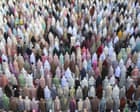
Approximately 2 billion Muslims worldwide celebrated Eid al-Adha, the Festival of Sacrifice, across Indonesia, the Philippines, and Malaysia in scenes captured by photographers documenting the second major Islamic holiday. Worshippers gathered at mosques, train stations, roadsides, and coastal areas to offer prayers as expressions of devotion, adherence, and community unity.
In Indonesia, the world's largest Muslim-majority nation, celebrations unfolded across Java, Sumatra, and Bali with traditional prayer services drawing crowds to major mosques in Jakarta, Surabaya, and Bandung. The Philippines saw Muslim communities in Mindanao and Manila's suburban areas organize observances despite being a predominantly Catholic nation. Malaysia's multicultural cities including Kuala Lumpur and Georgetown hosted festive gatherings that reflected the country's significant Muslim population.
The holiday marks a pivotal moment in the Islamic calendar, commemorating Prophet Ibrahim's willingness to sacrifice his son in obedience to God. Believers commemorate this act through animal sacrifices, family gatherings, and communal prayers. The observance carries deep spiritual significance across Southeast Asia, where Islam has flourished for centuries and shaped cultural traditions.
Travel patterns shift dramatically during Eid al-Adha as millions undertake pilgrimages or return home for celebrations. Airlines including Garuda Indonesia, Malaysia Airlines, and Philippine Airlines report peak booking periods during the holiday season. Hotels and guesthouses in religious hub cities experience full occupancy as families reunite across the region.
For travelers planning trips to Southeast Asia during Eid al-Adha, accommodation becomes scarce in Muslim-majority areas. Domestic transport systems face heavy congestion as locals travel for festivities. Western visitors should expect modified schedules at some businesses and restaurants, though major tourist infrastructure in Bali, Bangkok, and Kuala