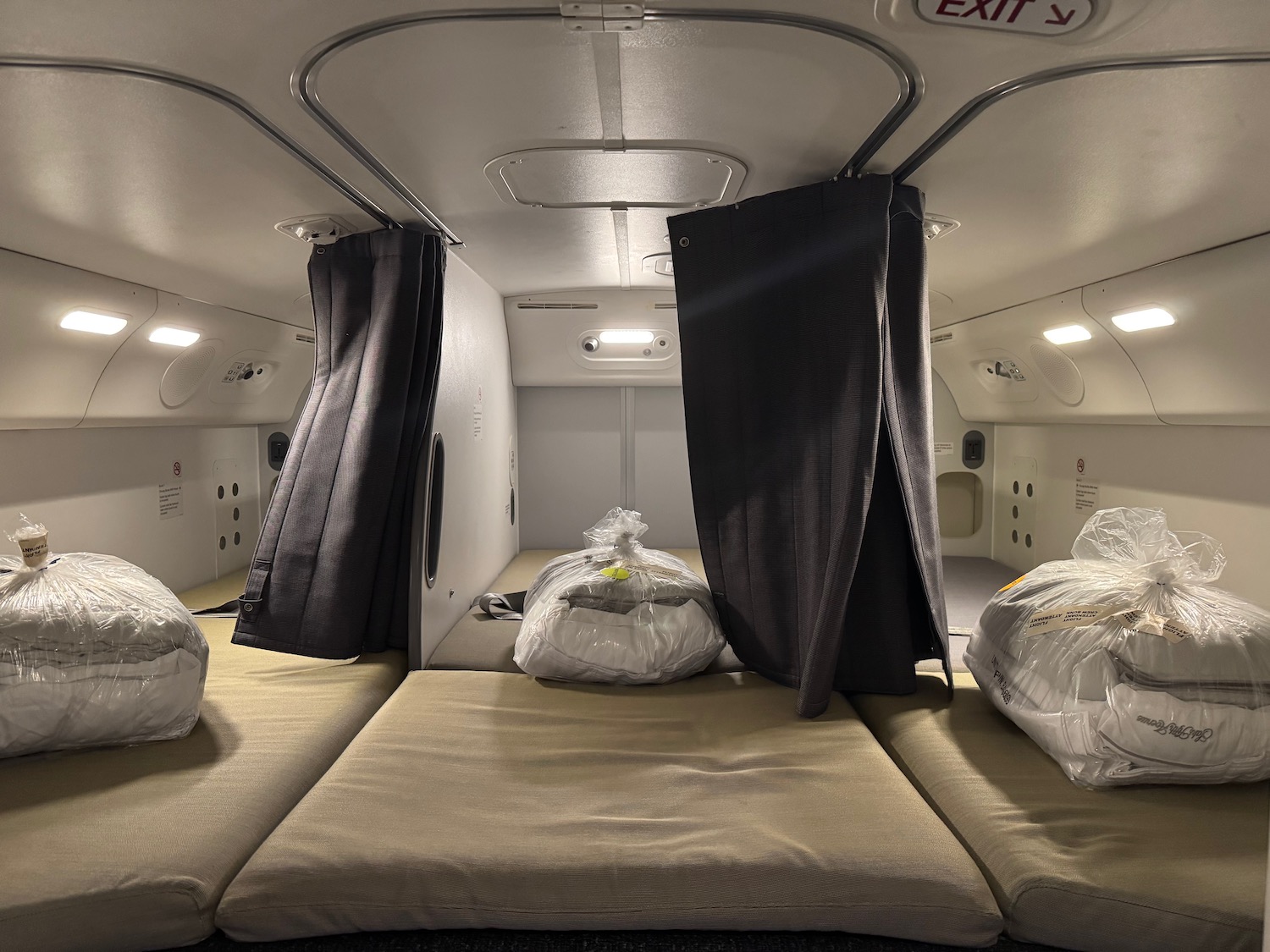
United Airlines flight attendants traveling on standby have gained access to hidden crew rest compartments on widebody aircraft, replacing uncomfortable jumpseats with dedicated bunks located above the main passenger cabin. This policy shift addresses a long-standing comfort issue for crew members deadheading between cities.
The crew bunks, standard features on Boeing 777 and 787 aircraft, remain largely unknown to passengers. These compact sleeping quarters sit tucked above the main deck, accessible only to flight crew. United previously restricted these spaces to pilots and flight attendants working scheduled rest periods on ultra-long-haul flights. Now standby flight attendants benefit from the same rest facilities.
This change reflects growing attention to crew fatigue and working conditions across the aviation industry. Flight attendants frequently deadhead on overnight flights to reach their assigned duty stations, often spending hours in cramped jumpseats near galley areas or cockpit entrances. The new policy allows rest crew to sleep in climate-controlled, purpose-built compartments instead.
The move comes as airlines balance passenger comfort with crew welfare. Other carriers including American Airlines and Delta Air Lines maintain similar crew rest areas on their widebody fleets, though policies vary on jumpseat-status employee access. United's decision positions the airline favorably in recruitment and retention efforts during a tight labor market for flight attendants.
For travelers, the change carries minimal impact beyond knowing crew members may rest more effectively during long flights. Better-rested flight attendants theoretically provide improved service consistency on transcontinental and international routes. The bunk spaces remain completely hidden from passengers, maintained behind secure doors accessible only from crew-only areas.
This adjustment to United's crew policies reflects industry-wide recognition that modern long-haul operations demand better rest infrastructure. As flight routes extend and crew scheduling grows more complex, airlines increasingly invest in facilities that reduce fatigue-related safety risks and operational disruptions.