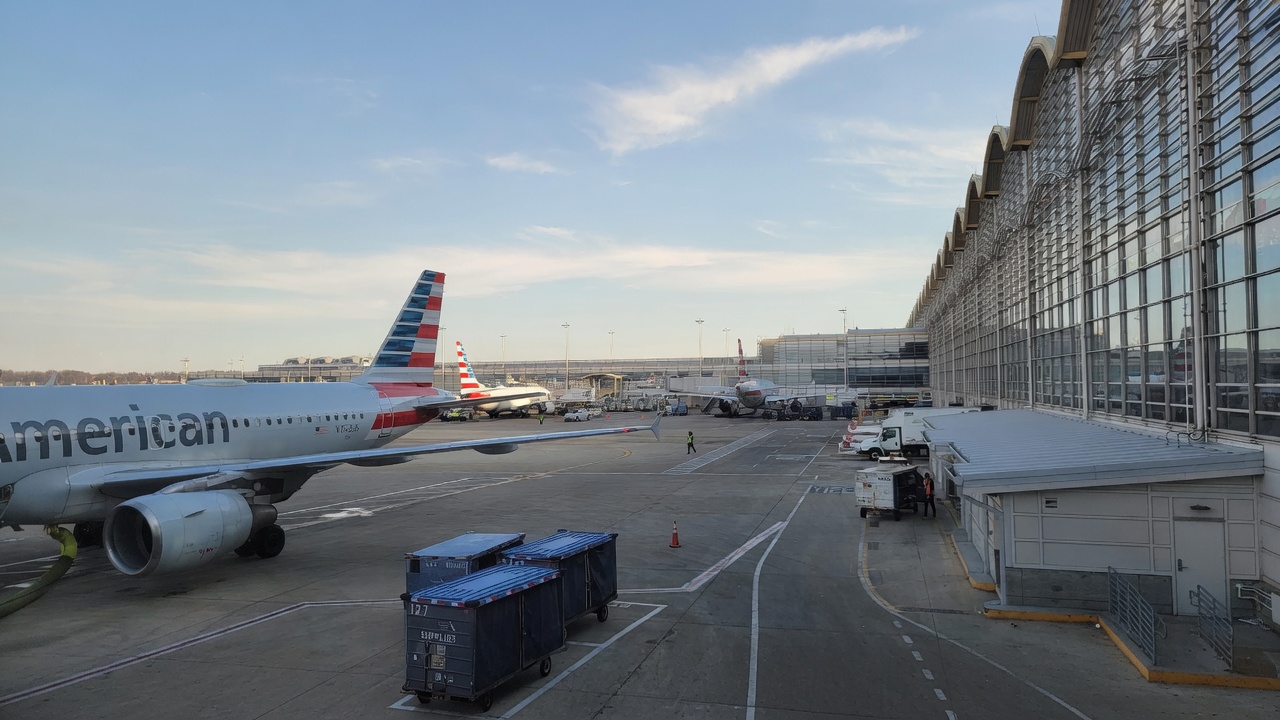
An American Airlines Boeing 737 aborted its landing approach at Ronald Reagan Washington National Airport after pilots spotted a Republic Airways regional jet unexpectedly occupying their runway. The incident underscores how easily confusion can develop in busy airspace when similar aircraft callsigns operate simultaneously at adjacent runways.
The Republic Airways regional jet, operating as a feeder flight for American Airlines, apparently accepted a takeoff clearance intended for another aircraft. Controllers had issued a line-up-and-wait instruction, a standard holding procedure where aircraft position themselves on the runway without immediate clearance to depart. This routine instruction transformed into a conflict when the regional jet entered Runway 1 while the American 737 descended toward the same runway for landing.
Reagan National operates under strict capacity constraints, serving as one of America's busiest airports while accommodating military traffic and maintaining noise restrictions for the surrounding Washington, D.C. area. The airport typically handles around 300 flights daily across its two primary runways and one secondary runway. Every aborted approach represents operational delays rippling through the system.
The 737 executed a go-around, circling back for another landing attempt without incident. Republic Airways operates the CRJ regional jets for American Airlines across the United States, handling short-haul routes that feed passengers into American's hub operations. Both aircraft involved in this incident operated under American Airlines branding, complicating radio communications and clearance delivery in the congested Washington airspace.
The Federal Aviation Administration has not announced enforcement actions, but the incident highlights the persistent challenge of human error in aviation. Call sign confusion remains a recurring issue in busy terminal control areas where pilots and controllers manage dozens of similar-sounding aircraft identifiers simultaneously.
Travelers using Reagan National should expect occasional delays from incidents like this, though aviation safety systems successfully prevented any collision. The incident serves as a reminder that ground operations require constant vigilance, particularly at