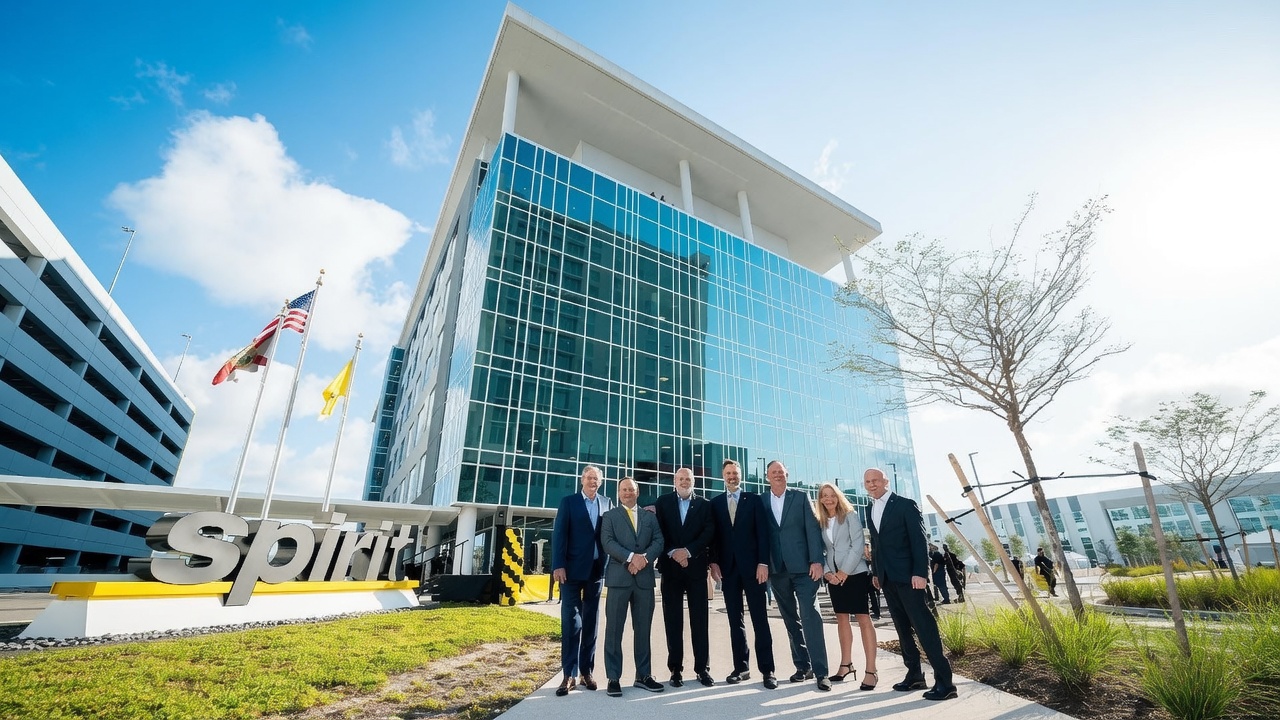
Spirit Airlines' bankruptcy filing has exposed the stunning collapse of a carrier that once dominated the ultra-low-cost segment. The airline's brand-new corporate campus, Spirit Central, opened in 2024 with a $250 million price tag and featured training facilities, employee housing, and workspace for over 1,000 employees. Now, less than a year after opening, a stalking horse bidder has valued the facility at just $88 million, marking a 65 percent loss on the investment.
This dramatic writedown reflects Spirit's spectacular fall from grace. The Fort Lauderdale-based carrier built Spirit Central as a symbol of growth and stability during a period when the airline had expanded far beyond its original ultra-low-cost model. The sprawling facility represented management's confidence in the company's future at the precise moment financial pressures were mounting.
Spirit's bankruptcy filing reveals how aggressively the airline had overextended. The airline faced mounting competition from larger carriers offering comparable fares, rising fuel costs, and consumer fatigue with its ancillary fee model. Unlike low-cost rivals like Frontier Airlines, which maintained disciplined growth, Spirit pursued expansion into markets that didn't sustain profitability. The campus itself became a symbol of misalignment between ambition and business fundamentals.
For the travel industry, Spirit's collapse signals that the ultra-low-cost model requires relentless operational discipline and careful capital allocation. The airline's $88 million valuation of Spirit Central suggests potential restructuring under new ownership or liquidation. Employees who relocated to the facility for jobs now face uncertainty, while passengers lose another discount carrier option.
Spirit's bankruptcy auction continues, with the corporate campus facing an uncertain future. Whether a new buyer emerges or assets sell piecemeal, the once-ambitious Spirit Central stands as a cautionary tale. The 65-percent markdown reflects not just market